

Nepal Lifts Social Media Ban After 20 Killed in ‘Gen Z Revolution’ Protests.
Facing mounting pressure from mass youth-led demonstrations, the KP Sharma Oli government in Nepal late on Monday rolled back its controversial ban on 26 social media platforms. The decision came after violent clashes between protesters and security forces left at least 20 people dead and more than 300 injured across the country.
From Online Campaign to Street Uprising
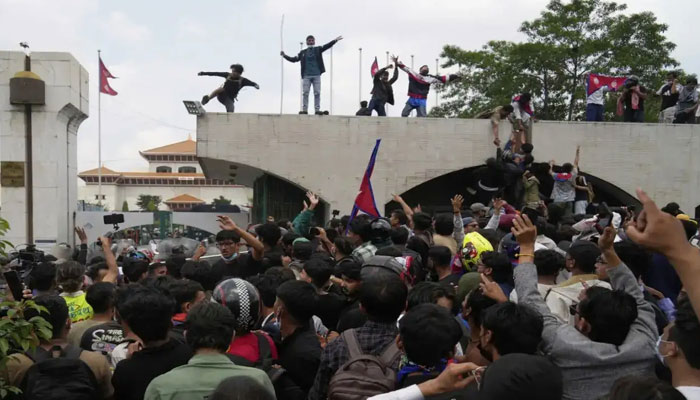
The protests, which began as online campaigns against the ban, quickly spiraled into the biggest street movement in years. Branded the “Gen Z Revolution,” thousands of students in school and college uniforms flooded Kathmandu and other cities, demanding not only the restoration of social media but also action against corruption and misgovernance.
Slogans such as “Shut down corruption, not social media” echoed across Nepal’s capital as demonstrators broke through police barricades and stormed restricted zones near Parliament House. Police responded with tear gas, water cannons, and eventually live fire, triggering nationwide outrage.
Government Buckles Under Pressure
At an emergency Cabinet meeting, the government announced the withdrawal of the ban. “The Cabinet has decided to restore all 26 platforms, including Facebook and X,” said Minister for Communication Prithvi Subba Gurung, urging protesters to disperse.
The U-turn marked a sharp contrast to Prime Minister Oli’s earlier defiance. He had vowed not to bow to what he called “Gen Z troublemakers,” even declaring he would rather step down than unban social media. The reversal came after Nepali Congress ministers staged a walkout, deepening rifts within the coalition.
Casualties and Political Fallout
The violence forced authorities to impose a curfew in Kathmandu and several other cities, while the Nepal Army was deployed to maintain order. Home Minister Ramesh Lekhak resigned, citing moral responsibility for the bloodshed.
Despite official claims that the agitation was youth-driven, analysts stressed that the movement had broader participation across generations, reflecting pent-up anger over corruption, unemployment, and inequality.
The Spark Behind the Unrest
The crisis was triggered by the government’s September 4 order blocking major platforms — including Facebook, WhatsApp, Instagram, YouTube, and X — after they failed to register locally. Protesters saw the move as state censorship aimed at silencing dissent.
Even amid internet blackouts, activists used TikTok, Reddit, and VPNs to mobilise. Marches began at Maitighar Mandala before converging on Parliament, where demonstrators torched a gate and clashed violently with police.
By late Monday night, calm had partly returned, though authorities remained on high alert amid fears the “Gen Z Revolution” could reignite.
Comments are closed.