

PM Modi’s Japan Visit to Unlock $68 Billion Investment Plan, New Economic Security Pact
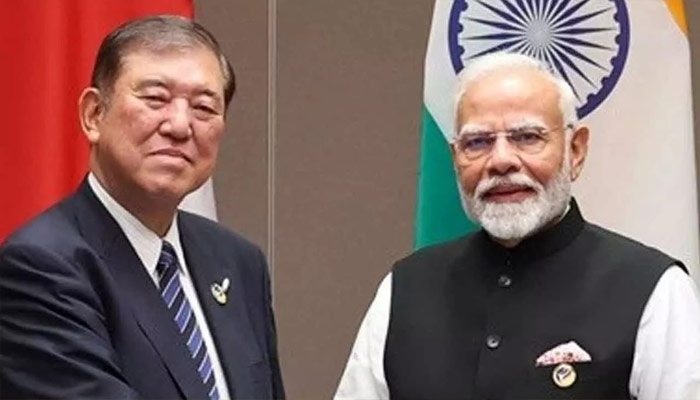
Prime Minister Narendra Modi will leave for Tokyo on Thursday evening for a two-day official visit to Japan, where he will hold talks with his counterpart Shigeru Ishiba during the 15th India–Japan Annual Summit on August 29–30.
A key highlight of the visit will be Japan’s announcement of a $68 billion investment plan in India over the next decade, one of Tokyo’s most ambitious pledges to New Delhi. The plan, framed under a new Economic Security Initiative, will focus on semiconductors, pharmaceuticals, clean energy, and manufacturing. The initiative is also designed to safeguard critical material supplies and strengthen infrastructure security.
Rising Japanese Investments
Japan has steadily expanded its economic footprint in India, signing more than 170 MoUs worth $13 billion in the past two years. These range from steel and automotive projects to renewables, real estate, aerospace, and semiconductors.
Notable ongoing projects include:
- Nippon Steel expanding in Gujarat and Andhra Pradesh with over ₹71 billion in investments.
- Suzuki Motor committing nearly ₹382 billion for new plants and production lines in Gujarat.
- Toyota Kirloskar investing over ₹233 billion in Karnataka and Maharashtra for EV and hybrid vehicle production.
- Sumitomo Realty investing $4.76 billion in Indian real estate.
- JFE Steel pledging ₹445 billion for electrical steel capacity.
- Astroscale partnering with ISRO for Japan’s first commercial satellite launch on PSLV.
SMEs and Technology Linkages
The partnership is also pulling Indian small and medium enterprises (SMEs) into global supply chains. Collaborations with Tokyo Electron, Fujifilm, and Tata Electronics are building a semiconductor ecosystem. Automotive value chains of Toyota and Suzuki are integrating hundreds of tier-2 and tier-3 Indian suppliers. Meanwhile, Fujitsu plans to recruit 9,000 Indian engineers through its Global Capability Centre.
Green Energy and Rural Impact
Japan is also backing India’s clean energy transition. Sojitz Corporation and Indian Oil are setting up 30 biogas plants worth $395 million, while Suzuki Motor and the National Dairy Development Board are rolling out four carbon-neutral biogas units in Gujarat. These initiatives will generate new farmer incomes, support rural jobs, and contribute to India’s climate goals.
Beyond Business: Talent and Exports
Under the India–Japan Talent Bridge, over 50,000 students, professionals, and researchers have participated in exchanges in the past five years. Meanwhile, Japanese-backed Indian ventures are gearing up to export specialty steel, hybrid and EVs, and renewable technologies to Africa, Southeast Asia, and the Middle East.
Strategic Takeaway
With a $68 billion investment commitment, closer supply chain integration, and a focus on clean energy and human capital, Modi’s visit is expected to elevate India–Japan ties to a new level. Analysts say the partnership is no longer confined to bilateral trade—it is shaping regional economic security and global industrial value chains.
Comments are closed.