

Gold Medal for Chaos: Cricket’s Olympic Return Is Already Unravelling
If the International Olympic Committee handed out medals for administrative chaos, geopolitical soap operas and an unrivalled ability to alienate one’s own audience, cricket would not just win gold — it would sweep the podium.
Two years before its long-awaited return to the Olympic stage at Los Angeles 2028, the sport resembles less a disciplined global enterprise and more a runaway freight train: powerful, fast and swerving wildly as competing interests yank at the brakes.
The Olympic ideal rests on uniform rules and predictable governance. Cricket arrives at LA28 dragging excess baggage — hybrid hosting models, retaliatory boycotts and a revenue hierarchy closer to feudal tribute than modern sporting democracy.
A Marquee Match Turned Ghost Fixture
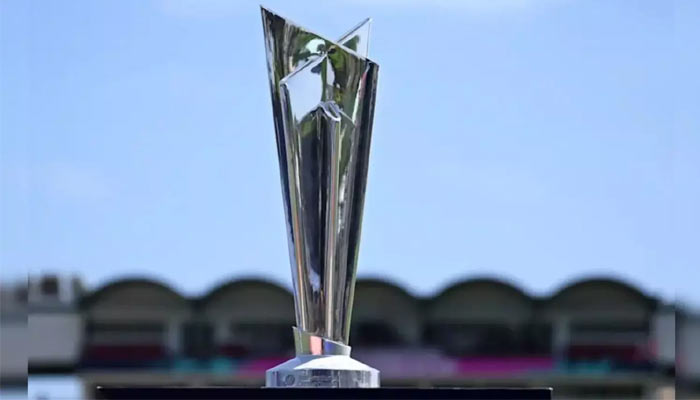
The latest tremor came from Islamabad. This week, the Pakistan government instructed the Pakistan Cricket Board (PCB) to boycott its marquee group match against India at the 2026 T20 World Cup, scheduled for February 15 in Colombo. Pakistan will still participate in the tournament. The India-Pakistan clash — the fixture that underwrites the commercial logic of the entire event — will not.
Calls for mutual boycotts are growing louder. But should world cricket be governed by retaliatory gestures and political signalling? Or is its purpose to unite, not fracture, a global audience?
At the centre of the current storm is Mohsin Naqvi, PCB chairman and Pakistan’s Interior Minister. To understand the present impasse, one must revisit the 2025 Asia Cup in Dubai — a tournament that became a case study in how quickly symbolism overwhelms sport.
When a Handshake Became a Diplomatic Incident
After India defeated Pakistan in Dubai, Indian players did not engage in the customary post-match handshake. What once might have passed as a fleeting moment of tension was quickly elevated into a political statement. Cameras lingered. Commentary filled the silence. The absence of a gesture became evidence of a deeper rupture beyond the boundary rope.
Pakistan’s response escalated matters. The team threatened to boycott its next match, leaving UAE players waiting on the field. Officials protested against match referee Andy Pycroft and delayed play by over an hour. A cricket match became theatre.
The trophy presentation that followed cemented the damage. In a scene that went viral, Indian players refused to accept the physical trophy from Naqvi. Administrators and players manoeuvred awkwardly as the trophy itself became a bargaining chip. For many viewers, it confirmed an uncomfortable truth: cricket’s governance has grown performative and overtly political, eroding the sport’s credibility.
Bangladesh, Boycotts and Selective Flexibility
That episode appears to have been a turning point. Since then, Naqvi has accused the ICC of double standards, publicly floating the idea of a World Cup boycott in solidarity with Bangladesh.
Dhaka’s predicament is less spectacle, more tragedy. Tensions escalated after the BCCI asked Kolkata Knight Riders to release Mustafizur Rahman weeks before the 2026 IPL season. Bangladesh responded with a nationwide IPL broadcast ban. The real fallout followed when the BCB requested its T20 World Cup fixtures be moved out of India citing security concerns.
The ICC refused, arguing there was no “verifiable threat”.
Bangladesh withdrew in protest and were replaced by Scotland — marking the first time one of cricket’s most passionate nations will be absent from the tournament.
The optics are damaging. Security concerns justify hybrid models when India or Pakistan refuse to travel, but become grounds for exclusion when raised by others. Whether or not this assessment is technically fair, perception has hardened — and perception, in governance, often becomes reality.
The Hybrid Model and the Cost to Fans
To keep tournaments commercially viable, the ICC has leaned heavily on hybrid hosting — a Frankenstein structure that allows India and Pakistan to play at neutral venues. It keeps broadcast revenues flowing, but at a steep cost: inflated logistics, confused schedules and fans left guessing whether matches will happen at all.
Money lubricates the system. The BCCI’s outsized contribution to cricket’s global revenues has translated into immense institutional influence. Accusations that the ICC bends its own rules to appease its largest stakeholder are not new; they are simply louder now.
Fans, meanwhile, absorb the fallout. Ticketing for major ICC events has become synonymous with chaos. For the 2023 World Cup, tickets went on sale barely 40 days before the opener. For the 2026 T20 World Cup, the official platform crashed instantly, trapping hundreds of thousands in virtual queues for a match that may not even exist.
“In any other sport, you book flights a year in advance,” says Gunalan, an avid fan. “In cricket, you don’t even know which country the semi-final will be in until the week before.”
Why the Olympics Are Different
Cricket’s problems are not black and white. Hosting multinational tournaments across politically sensitive regions is genuinely difficult. The ICC operates under real diplomatic constraints. Flexibility is sometimes necessary.
But flexibility has morphed into improvisation — and improvisation into cynicism.
The Olympics function differently. There are no neutral-venue carve-outs, no bespoke bilateral negotiations, no revenue models calibrated to commercial muscle. Nations compete under a single framework and accept uniform consequences. The system is blunt, but it is consistent.
Cricket, by contrast, has evolved through exception. Many of those exceptions were once reasonable. Over time, they have become habit. When every tournament requires custom rules, clarity is the first casualty.
Cricket does not need to abandon its complexity to thrive globally. It needs to organise it better: transparent criteria for boycotts, fixed timelines, and governance that feels rule-bound rather than reactive.
The Olympics will not bend to cricket’s accommodations. If the sport truly wants its Olympic future, it will have to meet the Games on their terms — not its own.
Comments are closed.