
Amid Fuel Supply Fears, Jaishankar Discusses West Asia Conflict With Global Leaders

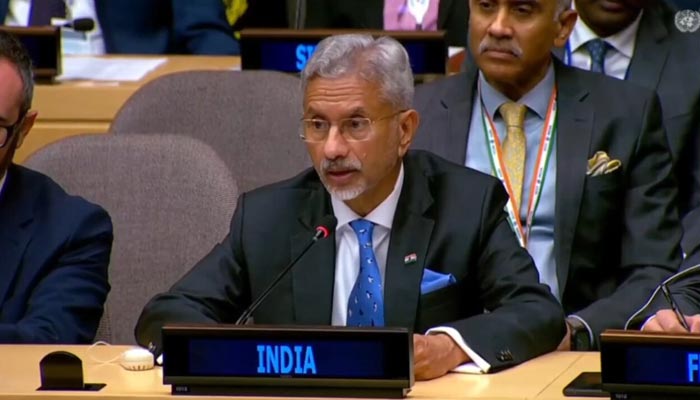
External Affairs Minister S. Jaishankar on Tuesday spoke with his counterparts from Germany and South Korea as the escalating conflict in West Asia continues to raise concerns over global energy supplies.
Jaishankar said he exchanged views with German Foreign Minister Johann Wadephul on the situation in the region. “Exchanged views with FM @JoWadephul of Germany on the ongoing conflict in West Asia,” he wrote in a post on X.
The External Affairs Minister also held a conversation with South Korean Foreign Minister Cho Hyun. According to Jaishankar, the two leaders discussed ways to advance bilateral cooperation as well as the broader implications of the conflict. “Had a good conversation with FM Cho Hyun. Discussed advancing our bilateral agenda, as also the situation in West Asia, including its energy implications,” he said.
The diplomatic outreach comes as the ongoing conflict threatens shipping through the Strait of Hormuz, a key maritime corridor through which nearly one-fifth of the world’s oil and natural gas supplies pass. A day earlier, Jaishankar had also spoken with Italy’s foreign minister Antonio Tajani to review developments in the region. The escalating tensions have already triggered sharp volatility in global crude prices, which surged to around $115 per barrel on Monday.
Several countries across South Asia are bracing for the impact. Governments in Bangladesh, Pakistan and Sri Lanka have announced emergency measures to conserve fuel and manage electricity demand as global energy supply chains face disruption.
India Reviews Fuel Preparedness
Amid rising concerns, Prime Minister Narendra Modi on Tuesday held a meeting with Petroleum Minister Hardeep Singh Puri and Jaishankar to review LPG supplies and assess potential disruptions caused by the conflict.
The government has also invoked the Essential Commodities Act to safeguard the domestic fuel market. The Petroleum Ministry issued a control order directing refineries and petrochemical units to increase liquefied petroleum gas production and divert key hydrocarbon streams to the LPG pool to ensure uninterrupted supply across the country.
State-run oil companies including Indian Oil Corporation, Bharat Petroleum Corporation Limited and Hindustan Petroleum Corporation Limited said steps are being taken to ramp up LPG output and maintain adequate stocks for households and essential sectors.
Trump’s Remarks on Iran War
Meanwhile, US President Donald Trump offered mixed signals about the ongoing conflict with Iran. Speaking to Republican lawmakers at his golf club near Miami, Trump said the war was “pretty much over,” but warned that any attempt by Iran to disrupt oil shipments through the Strait of Hormuz would trigger a response “twenty times harder” than previous strikes.
Iran, however, signalled it would continue to resist. A spokesperson for the Revolutionary Guard said Tehran would decide when the conflict ends.
Trump also held a conversation with Russian President Vladimir Putin on Monday to discuss the possibility of a quick settlement. The call came as Russia pledged support to Iran’s new supreme leader, Mojtaba Khamenei
Comments are closed.