

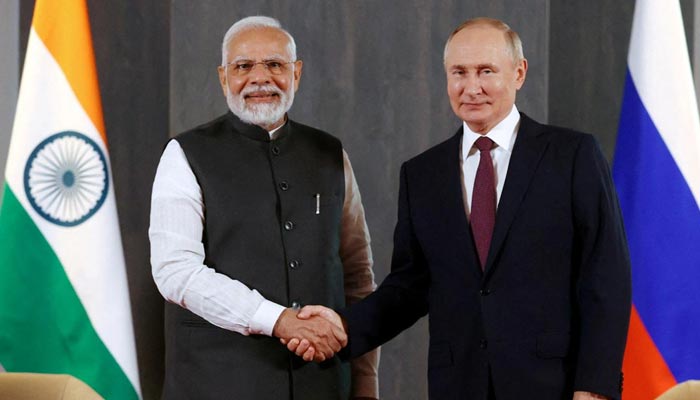
Russia has signalled its willingness to support India with additional energy supplies if the escalating Gulf crisis disrupts global oil flows, according to a Russian source quoted by Reuters.
The assurance comes as tensions in West Asia unsettle energy markets and raise concerns over shipments through the Strait of Hormuz — a critical artery for global oil and gas trade.
India Says Stocks Adequate for Now
The Indian government on Tuesday said the country has sufficient crude oil and fuel reserves to manage any short-term supply disruption. Official sources indicated that existing inventories of crude and petroleum products can meet domestic demand for petrol, diesel and other fuels for six to eight weeks.
In total, India holds stocks equivalent to about 50 days — roughly 25 days of crude oil and another 25 days of refined petroleum products — providing a buffer against immediate shocks.
However, nearly half of India’s crude and LPG imports pass through the Strait of Hormuz, which has witnessed shipping disruptions following US and Israeli strikes on Iranian targets and Tehran’s warnings to vessels in the region. Insurance withdrawals have further complicated tanker movements, PTI reported.
Officials said India is simultaneously exploring alternative sourcing options for crude oil, LPG and LNG to reduce exposure to regional risks.
Strategic Reserves and Monitoring
Petroleum and Natural Gas Minister Hardeep Singh Puri said India is well prepared to deal with any short-term supply volatility arising from geopolitical tensions, according to the Press Information Bureau.
India — the world’s third-largest crude importer — also ranks fourth in refining capacity and fifth in petroleum product exports. Authorities stressed there is no immediate cause for concern, with adequate reserves of crude as well as key fuels such as petrol, diesel and aviation turbine fuel (ATF).
To strengthen preparedness, the ministry has activated a 24×7 control room to track stock levels and fuel availability across the country. The current inventory position has been described as “reasonably comfortable.”
Russia as a Backup Supplier
Against this backdrop, Moscow has indicated it could step in with additional supplies if required. According to PTI, India may tap Russian crude to offset any shortfall from West Asian producers if disruptions intensify.
In recent years, India has diversified its crude procurement strategy, including significantly ramping up imports from Russia following the Ukraine conflict. While India had earlier agreed to gradually reduce Russian purchases under a trade understanding with the US, that framework now faces uncertainty.
Price Pressures Loom
Though supply shortages appear unlikely in the immediate term, officials cautioned that price volatility remains a key risk. Brent crude has climbed above $80 per barrel, roughly 10 per cent higher since the Iran crisis escalated, raising concerns about India’s import bill and inflation trajectory.
India spent $137 billion on crude imports in FY2024-25 and $100.4 billion between April 2025 and January 2026.
Aviation Sector on Alert
Separately, the Airports Authority of India has directed international airport operators to share details of aviation turbine fuel stocks and projected requirements for the next seven days.
The directive, issued on instructions from the civil aviation ministry, is described as a precautionary step to assess fuel availability amid the volatile situation. Operators have been asked to provide data on daily consumption, replenishment schedules and inventory levels.
India has 33 international airports. On March 2 alone, authorities recorded 355 international departures and 344 arrivals.
With roughly one-third of global seaborne crude and about 20 per cent of LNG shipments transiting the Strait of Hormuz, any prolonged disruption could carry wider economic implications. For now, however, officials maintain that India remains in a stable position while contingency plans stay firmly in place.
Comments are closed.