
AR Rahman Says ‘Khwaja Mere Khwaja’ Paved His Path to Oscars: ‘His Blessings Took Me to Hollywood’

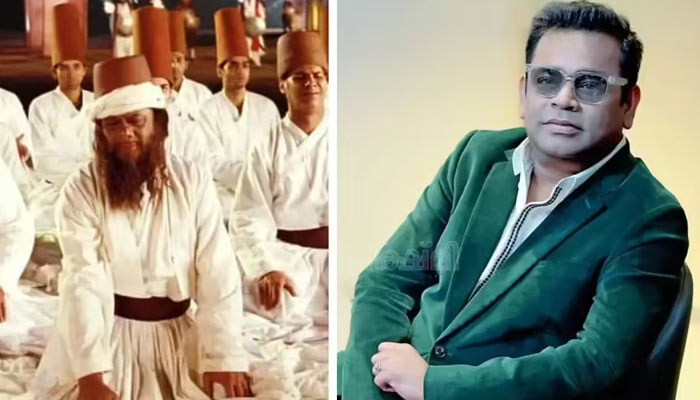
Few songs in Indian cinema evoke as much spiritual depth as Khwaja Mere Khwaja.
For music maestro A.R. Rahman, the track from Ashutosh Gowariker’s Jodhaa Akbar (2008) was more than just a devotional piece — it was a divine spark that, he believes, guided him toward his historic double Oscar win for Slumdog Millionaire the following year.
In a recent conversation with NDTV, Rahman reflected on the song’s origins and its unexpected journey to the silver screen.
A Song Born From Prayer, Not a Film Brief
Rahman revealed that Khwaja Mere Khwaja was never originally written for Jodhaa Akbar. The inspiration struck during his visit to the Ajmer Sharif Dargah of Khwaja Moinuddin Chishti, where a Khadim urged him to compose something in the saint’s honour. “He said, ‘You did Piya Haji Ali, but nothing for Khwaja.’ I replied, ‘I’m not feeling it yet — pray that I do,’” Rahman recalled.
Months later, while on a flight to Australia, Rahman was struggling to create a melody for a romantic track. “It wasn’t working,” he said. “So, I turned it into a song for Khwaja. I recorded it and asked lyricist Kashif to complete it. A year later, Ashutosh [Gowariker] came to me with Jodhaa Akbar.”
When Ashutosh Gowariker Heard It
During their discussions, Gowariker mentioned a scene where Emperor Akbar, played by Hrithik Roshan, visits the Ajmer Dargah. Rahman instantly offered him Khwaja Mere Khwaja. “He said he only needed two lines. I told him it was a full composition,” Rahman laughed.
When the filmmaker heard the piece, he was deeply moved. “He held my hands and said, ‘Please give me this song.’ I agreed — but only if he didn’t change a thing,” Rahman recounted. “Two years later, I was at the Oscars. I truly believe it was Khwaja’s blessing.”
Music Rooted in Faith
Rahman also spoke about the spiritual undercurrents behind many of his works. His hit Mayya Mayya from Guru (2007), for instance, was inspired during his Haj pilgrimage. “Vendors were shouting ‘Moya! Moya!’ — meaning water in Arabic. The rhythm struck me instantly,” he said. “Even though the song isn’t about water, that sound shaped it.”
A Devotional Bond With Lata Mangeshkar
Rahman fondly remembered his deep admiration for the late Lata Mangeshkar. His father used to compose music every morning before her portrait, inspiring Rahman’s lifelong wish to sing with her. That dream came true with Luka Chuppi from Rang De Basanti (2006) — an emotional duet between a mother and her fallen son. “I was greedy for that experience,” he admitted. “It remains one of my most personal songs.”
A Prayer That Became Destiny
For Rahman, Khwaja Mere Khwaja was not merely a song — it was a moment of surrender and grace. From the quiet of Ajmer to the global stage of Hollywood, the melody became a bridge between faith and fame. “His blessings took me to Hollywood,” Rahman said with a smile — a testament to how devotion continues to shape the soul of his music and legacy.
Comments are closed.