

Nepal’s Balen Shah Government Faces Gen-Z Backlash After Driver’s Self-Immolation Death
A fresh wave of youth-led protests has erupted in Nepal, placing Prime Minister Balendra “Balen” Shah’s government under intense scrutiny after the death of a 25-year-old ride-hailing driver who allegedly died by self-immolation following a dispute with municipal police over a parking fine.
The demonstrations mark the first major public backlash against the Shah government, which swept to power just three months ago with strong support from young voters after last year’s Gen-Z-led political movement reshaped Nepal’s political landscape.
Death of Pathao Rider Sparks Outrage
The protests were triggered by the death of Ganesh Nepali, a driver associated with ride-hailing platform Pathao.
According to officials, Nepali had parked his motorcycle outside the Department of Passports in Kathmandu’s Tripureshwar area while waiting for his next booking. Municipal police allegedly asked him to move the vehicle before locking one of its wheels over a parking violation.
Police said Nepali argued with officers for nearly two hours over the 1,000 Nepali rupee fine before allegedly taking petrol from his motorcycle, pouring it over himself and setting himself on fire.
Officers rushed to douse the flames and he was admitted to Bir Hospital, where he later died from severe burn injuries.
Hundreds Join Gen-Z Protest
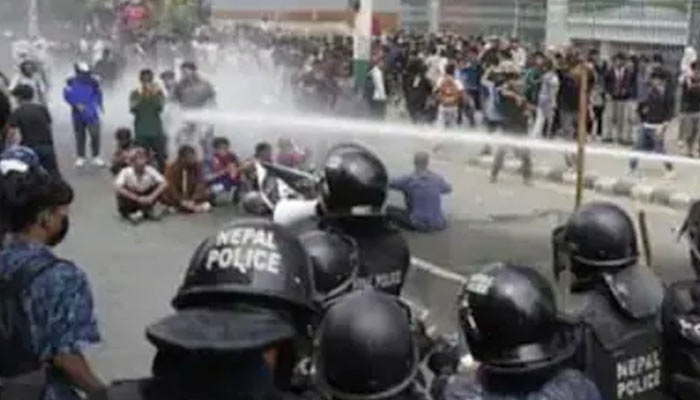
Nepali’s death triggered widespread outrage, with hundreds of young people gathering outside the Singhdurbar Secretariat in Kathmandu on Sunday to demand accountability.
Protesters accused the government of adopting an insensitive approach towards ordinary citizens and called for an independent investigation into the circumstances surrounding the incident.
The unrest has also fuelled criticism of the Shah government’s recent policies, including stricter traffic enforcement and proposals to increase fines for traffic violations, which have faced growing opposition on social media.
Authorities Order Independent Investigation
Amid mounting public pressure, the Kathmandu Metropolitan City signed a nine-point agreement with Nepali’s family. The deal includes the formation of an independent inquiry committee and the suspension of personnel involved in the incident until the probe is completed.
Separately, the Nepal government has constituted a five-member investigation committee, headed by Deputy Inspector General of Police Govinda Thapaliya, to examine the events leading to the self-immolation.
Opposition Steps Up Attack
The tragedy has quickly turned into a political issue, with opposition leaders accusing the government of failing to protect its citizens.
In the National Assembly, Nepali Communist Party lawmaker Bishnu Bahadur Bishwakarma criticised the administration’s handling of the incident, while in the House of Representatives, Nepali Congress chief whip Basana Thapa questioned the government’s commitment to public safety.
First Major Test for Balen Shah
The protests represent the biggest challenge yet for the Balen Shah administration, which came to power on the promise of cleaner governance and administrative reforms backed by a strong youth mandate.
With public anger continuing to build, the outcome of the official investigations—and the government’s response to the demands for accountability—could prove critical in determining whether Shah can retain the confidence of the young voters who helped propel him to office.
Comments are closed.