

Why Ullozhukku’s National Award Feels Like a Win for All Women.
In an industry where women’s stories are often sidelined or oversimplified, Ullozhukku arrives as a bold, necessary exception. Its win for Best Malayalam Film at the 71st National Film Awards — alongside Urvashi’s honour for Best Supporting Actress — feels personal for many, especially those yearning for deeper, more authentic female narratives in Indian cinema.
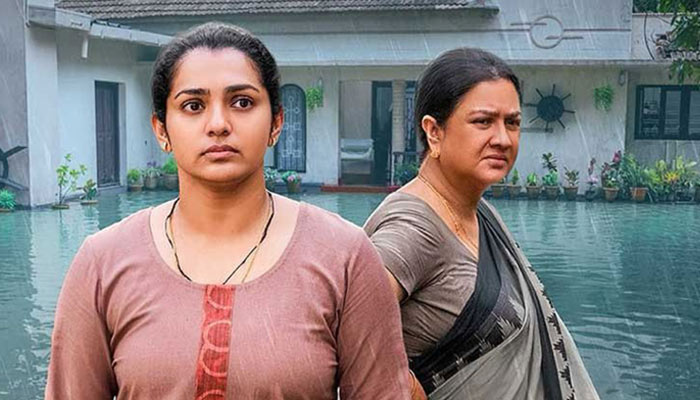
Directed by Christo Tomy and led by Parvathy Thiruvothu and Urvashi, Ullozhukku (meaning “undercurrent”) is a deeply layered exploration of grief, duty, and suppressed desires. More than a critique of patriarchy, it’s a story of silent rebellion — and the unexpected sisterhood that forms between two women navigating emotional isolation in a home defined by illness and secrecy.
The film’s emotional power lies in its refusal to moralise. Urvashi’s Leelamma hides her son’s illness to ensure his marriage, not out of cruelty, but fear and desperation. Parvathy’s Anju, trapped in an unhappy marriage, seeks intimacy outside it while caring tenderly for her terminally ill husband. Both characters are morally conflicted, but never judged — they’re women shaped by circumstance, clinging to agency where they can find it.
Their bond doesn’t erupt from a dramatic confrontation but unfolds like the floodwaters that surround them — slowly, powerfully. As secrets surface and roles unravel, what remains is not rivalry, but reluctant recognition. The real heart of Ullozhukku is not in its tragedy, but in its empathy.
At a time when some National Award wins have stirred debate, Ullozhukku stands out as a deserving, quietly revolutionary film. Its theatrical release in June 2024 was met with overwhelming praise, not just for its direction and performances, but for its willingness to centre women as flawed, resilient, and real.
For many women, this win goes beyond cinema. It’s a rare celebration of stories that mirror their emotional realities — the weight of caregiving, the loss of self in traditional roles, the quiet strength found in shared struggle. Ullozhukku doesn’t just give its characters voice — it gives them choice. And in doing so, it offers hope.
In the end, Ullozhukku reminds us that sometimes the most profound revolutions happen not in grand gestures, but in the simple act of two women choosing to see each other, truly, for the first time.
Comments are closed.