
Bihar Election Phase 2: Voting underway with spotlight on Seemanchal region

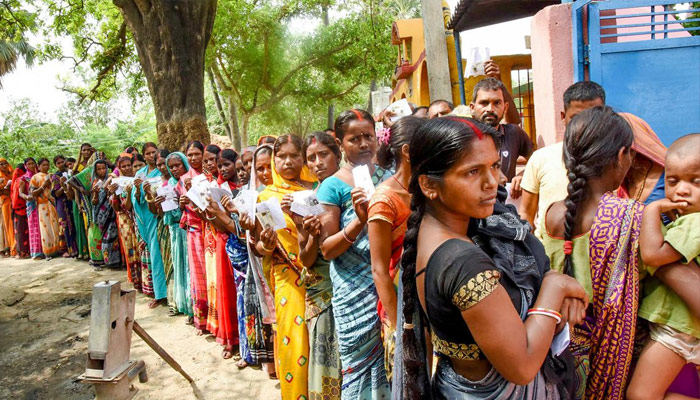
Bihar is voting today in the second and final phase of its high-stakes Assembly elections, with 3.7 crore eligible voters deciding the fate of 1,302 candidates across 122 constituencies.
The final phase is expected to witness intense contests, as the performance of smaller regional parties could significantly influence the overall outcome. After recording its highest-ever turnout of over 65% in the first phase, the Election Commission is expecting a similarly strong voter response this time. To ensure smooth polling, more than four lakh security personnel have been deployed across the state.
The campaign leading up to this phase saw sharp exchanges between the ruling NDA and the opposition INDIA bloc. Prime Minister Narendra Modi said the people of Bihar had already given the opposition a “65-volt jhatka,” while Congress leader Rahul Gandhi, addressing rallies in Kishanganj, accused the BJP and RSS of dividing the nation and said the INDIA bloc stood for unity.
Much of the spotlight in this phase is on the Seemanchal region, which includes districts such as Kishanganj, Araria, Purnia, Supaul, and Champaran. With a large Muslim population, the area is seen as a key battleground between the NDA, which has accused its rivals of “shielding infiltrators,” and the INDIA bloc, which has focused on economic development and social inclusion.
Smaller regional outfits are also in play. Jitan Ram Manjhi’s Hindustani Awam Morcha (HAM), Mukesh Sahni’s Vikassheel Insaan Party (VIP), and Upendra Kushwaha’s Rashtriya Lok Morcha (RLM) are contesting strategically across several seats, hoping to expand their influence. AIMIM, led by Asaduddin Owaisi, is focusing its campaign in Seemanchal to repeat its five-seat success from 2020.
Key candidates in this phase include JD(U)’s Bijendra Prasad Yadav from Supaul, BJP’s Prem Kumar from Gaya Town, and former deputy CM Tarkishore Prasad from Katihar. Several constituencies are witnessing multi-cornered fights, with some having as many as 22 candidates in the fray.
Polling is taking place at over 45,000 booths, mostly in rural areas. Of the total electorate, 1.75 crore are women, underscoring the diverse participation in what is expected to be a decisive phase for Bihar’s political future.
Comments are closed.