
British Intelligence Assisted Canada in Probing India’s Involvement in Nijjar Killing: Report

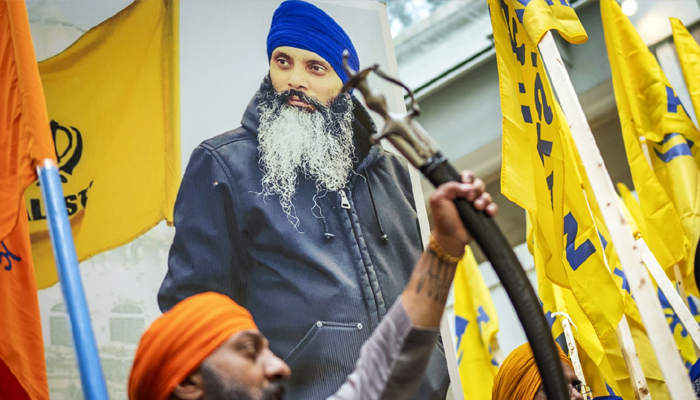
A new investigative documentary has reignited the diplomatic row between India and Canada over.
The killing of Khalistani separatist Hardeep Singh Nijjar, alleging that British intelligence intercepts played a key role in helping Canadian authorities link the murder to India. The claims, featured in a Bloomberg Originals documentary, suggest that the UK’s electronic spy agency, the Government Communications Headquarters (GCHQ), intercepted communications referring to three individuals — Hardeep Singh Nijjar, Avtar Singh Khanda, and Gurpatwant Singh Pannun.
According to the documentary, the intercepted calls were shared with Canada in late July 2023 under the Five Eyes intelligence-sharing alliance — comprising the UK, US, Canada, Australia, and New Zealand. These intercepts allegedly proved pivotal in the Royal Canadian Mounted Police (RCMP) investigation into Nijjar’s assassination.
The intelligence, said to be delivered under strict security protocols, was reportedly hand-carried to Ottawa, kept off digital systems, and accessible only to a few pre-approved Canadian officials. The intercepted conversations purportedly included remarks suggesting that individuals “believed to be acting on behalf of the Indian government” had discussed Nijjar’s “successful elimination.”
The revelations have sparked renewed scrutiny in the UK. The Sikh Federation (UK) has written to Security Minister Dan Jarvis, seeking answers on why such intelligence was not previously shared with lawmakers representing Sikh constituencies. The group has also demanded transparency regarding possible British intelligence related to the June 2023 death of Avtar Singh Khanda in Birmingham — a case authorities ruled as non-suspicious, despite claims from Sikh activists.
India dismisses claims as baseless
India has firmly rejected the allegations, calling them “absurd, politically motivated, and unsubstantiated.” New Delhi maintains that Ottawa continues to harbour extremist Khalistani elements and has urged Canada to act against them.
The controversy first erupted in September 2023 when Prime Minister Justin Trudeau claimed that Canadian agencies were investigating “credible allegations” linking Indian agents to Nijjar’s killing — a statement that led to diplomatic expulsions and a sharp downturn in bilateral ties.
Tensions began to ease after Mark Carney’s Liberal Party took power in April 2025. His meeting with Prime Minister Narendra Modi during the G7 Summit in June signalled a cautious thaw in relations. By August, both nations had restored envoys to their respective capitals — a tentative step toward normalization, even as the Nijjar controversy continues to loom over the diplomatic reset.
Comments are closed.