
Budget 2026 boosts infra, defence, AI data centres; cuts cost of cancer medicines

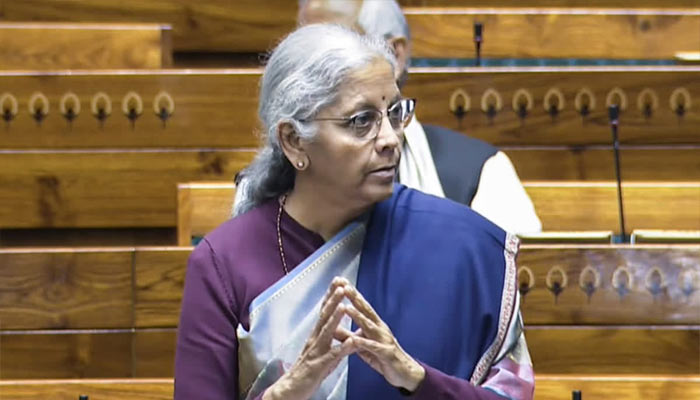
Finance Minister Nirmala Sitharaman on Sunday presented a Budget that doubles down on infrastructure expansion, domestic manufacturing, easier tax compliance, a clearer AI and digital infrastructure roadmap, and fiscal discipline.
The government expects the economy to grow at around 7% in the coming year while keeping the fiscal deficit at 4.3% of GDP. The Budget is anchored in the government’s three Kartavya pillars—growth, competitiveness and inclusion.
Prime Minister Narendra Modi described the Budget as one that strengthens India’s reform trajectory and reflects the aspirations of 140 crore citizens, saying it adds momentum to the country’s push to become the world’s third-largest economy. This explainer walks through the key Budget takeaways across infrastructure, manufacturing, defence, taxes, healthcare, technology and markets.
Infra, manufacturing take centre stage
Infrastructure remains the backbone of the government’s economic strategy. Among the headline announcements is a new dedicated freight corridor between Dankuni and Surat.
Twenty national waterways will be added, while a coastal cargo promotion scheme aims to shift freight toward inland and coastal routes. Tier II and Tier III cities are set to be developed into City Economic Regions with high-speed rail connectivity, stronger logistics networks and deeper urban investment.
Manufacturing received a major push. Support was announced for semiconductor fabrication under ISM 2.0, along with incentives for electronics components, biopharma, construction equipment, sports goods and rare earth magnets.
Two hundred industrial clusters will be revived, while chemical parks and container manufacturing units are expected to expand capacity. Customs duty cuts will lower costs for aircraft parts, microwave components, seafood processing inputs and aerospace materials.
Manmeet Kaur, Partner at Karanjawala & Co., said the focus on domestic manufacturing is a strategic step to reduce import dependence and generate employment, though execution will determine whether gains translate into broader income growth.
MSMEs get equity and liquidity support
A ₹10,000 crore SME Growth Fund will expand equity access for MSMEs. Liquidity measures include mandatory TReDS usage for CPSE procurement and credit guarantees for invoice discounting to ease working capital stress. The introduction of Corporate Mitras is intended to help smaller firms manage compliance at lower cost.
Defence allocation gets a sharp boost
Defence spending rose sharply, with the total allocation increasing to about ₹7.85 lakh crore from roughly ₹6.81 lakh crore last year—a near 15% jump—signalling a stronger focus on readiness and modernisation amid ongoing security concerns with China and Pakistan.
Capital expenditure for defence has been raised to around ₹2.31 lakh crore from ₹1.80 lakh crore, reflecting greater emphasis on advanced weapon systems and domestic production. The defence ministry remains among the largest budgetary recipients, covering salaries, pensions, modernisation and procurement of high-end military hardware.
What changed on taxes?
Tax measures extended beyond compliance tweaks to targeted relief. The finance minister cut TCS on overseas tour packages and remittances for education and medical expenses under the Liberalised Remittance Scheme to 2% from 5%.
Interest awarded by motor accident tribunals to natural persons will now be exempt from income tax, ensuring victims retain full compensation. Sitharaman confirmed that the New Income Tax Act will come into force from April 1, 2026, replacing older provisions with a modern, streamlined framework.
Additional measures include longer timelines for revising returns, relaxed TDS rules and simplified filing procedures. Lokesh Shah, Partner at CMS Induslaw, said the new Act marks an important step toward clarity and simplicity, while Moin Ladha of Khaitan & Co. said merging assessment and penalty processes would reduce litigation.
Cheaper cancer drugs bring patient relief
Customs duties have been waived on 17 critical cancer drugs, lowering treatment costs for patients reliant on imported therapies.
Manish Dodeja, COO at Care Health Insurance, called the move patient-centric, saying it would ease out-of-pocket expenses and improve access to life-saving treatment. He added that the TCS cut on overseas medical remittances would further support families seeking specialised care abroad.
Tech, semiconductors and AI in focus
The Budget strengthens India’s semiconductor and electronics push through ISM 2.0 and greater focus on rare earth mining and domestic production. Mohammad Athar Saif of PwC India said the strategy improves India’s long-term positioning in advanced supply chains, while Sujay Shetty noted that scale and execution will be key to success.
AI and digital infrastructure received a structural boost. Long-term tax holidays were announced for foreign firms setting up data centres and cloud facilities, alongside a safe harbour regime to reduce regulatory friction. The finance minister highlighted digital public infrastructure, sector-specific data platforms and advanced skilling as key enablers of AI adoption across healthcare, manufacturing, finance and governance.
Industry analysts expect spillover benefits for industrial real estate, power equipment, cooling systems and network infrastructure.
Capex push and market impact
Capital expenditure remains a priority, with outlays rising to ₹12.2 lakh crore.
Anil Rego of Right Horizons PMS said the capex push improves visibility for infrastructure, construction, capital goods, cement and logistics. He added that PSUs could see renewed investor interest, though banks may see mixed reactions due to the absence of fresh recapitalisation.
Data centre operators stand to benefit from tax incentives and regulatory certainty, while the STT hike on F&O trades could weigh on broker and exchange earnings in the near term.
Why did markets fall?
Markets slipped sharply after the Budget, driven largely by the increase in Securities Transaction Tax on F&O trades, which raised immediate trading costs. Divam Sharma of Green Portfolio PMS said even modest cost changes can trigger volatility in the derivatives-heavy market. Algorithmic unwinding and the absence of major consumption-side stimulus added pressure.
Clarification that buyback proceeds will be taxed as capital gains also prompted some reassessment among investors.
Despite the sell-off, analysts stressed the reaction was mechanical rather than structural. Sonam Srivastava of Wright Research PMS said the Budget reinforces India’s capex cycle and fiscal predictability, while Varun Gupta of Groww Mutual Fund said the broader policy direction remains supportive for long-term flows.
A long-term Budget
The fiscal stance remains conservative, with the deficit target retained at 4.3% and a continued glide path toward consolidation. Gross borrowing is expected to stay stable, while states will receive ₹1.4 lakh crore in Finance Commission grants.
Transport and defence dominate allocations, followed by rural development, agriculture, education, health and energy. Overall, the Budget scores high on infrastructure, manufacturing, semiconductors, AI and tax simplification. It offers limited direct consumption relief, positioning itself firmly as a long-term, structural Budget rather than a short-term stimulus.
Comments are closed.