

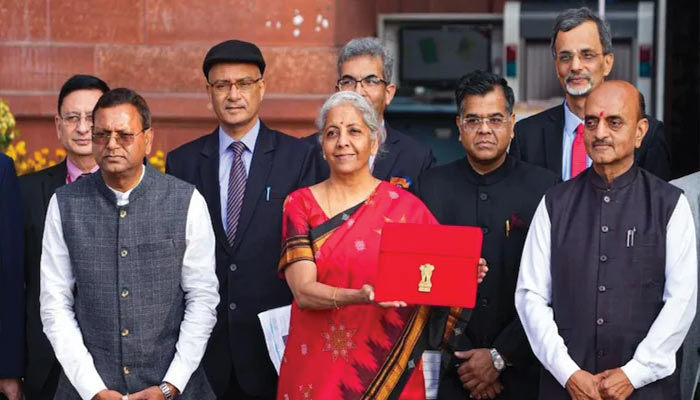
Finance Minister Nirmala Sitharaman’s ninth consecutive Union Budget is set to depart from long-standing convention, with Part B of the Budget speech expected to emerge.
As the primary platform for articulating India’s economic vision and reform agenda, according to government sources. Traditionally, Part A of the Budget speech has carried the bulk of the narrative, reviewing macroeconomic conditions and outlining broad policy priorities, while Part B has been largely confined to tax proposals and technical announcements. This year, however, Sitharaman is expected to devote unusual attention to Part B, using it to spell out both near-term policy actions and the government’s longer-term economic roadmap.
Officials said the expanded focus will reflect India’s evolving priorities as it positions itself for the next phase of growth. The speech is expected to highlight the country’s strengths and future potential across manufacturing, trade and exports, offering a clearer sense of direction for investors, economists and policy observers in India and overseas.
‘REFORM EXPRESS’ AGENDA
The shift in emphasis is also expected to mirror the broader reform thrust of Budget 2026–27, internally described by officials as “Reform Express”.
According to sources, the Budget will be anchored in cross-sector reforms aimed at simplifying regulations, improving competitiveness and strengthening domestic manufacturing. The approach assumes greater significance amid a slowing global economy and renewed tariff pressures from the United States.
Officials see the upcoming Budget as an opportunity to advance structural reforms that can sustain growth while cushioning the economy against external shocks.
CUSTOMS AND TRADE REVAMP
Trade and customs reforms are expected to figure prominently in Part B of the speech. Government officials indicated that the Centre is working on a fresh overhaul of India’s customs duty framework, including proposals to rationalise basic customs duty slabs and simplify procedures.
“The objective is to reduce compliance costs, minimise disputes—particularly classification-related litigation—and improve predictability for firms operating within global value chains,” a senior official said.
The exercise takes on added importance as India expands its network of free trade agreements and continues negotiations with developed economies, where the country’s complex tariff structure has often been flagged as a concern. A streamlined customs regime is expected to strengthen India’s negotiating position while improving ease of doing business domestically.
UNIFIED EXPORT AND MANUFACTURING ZONES
Part B is also expected to outline changes to export and manufacturing frameworks, including a proposal to integrate existing schemes such as Special Economic Zones, Export Oriented Units and the MOOWR regime into a Unified Export and Manufacturing Zone.
Officials said the move is aimed at creating a more coherent and efficient ecosystem for exporters and manufacturers. The proposed framework is expected to prioritise domestic manufacturing, boost export resilience and encourage higher value addition, aligning with the government’s broader industrial and trade strategy.
Comments are closed.