

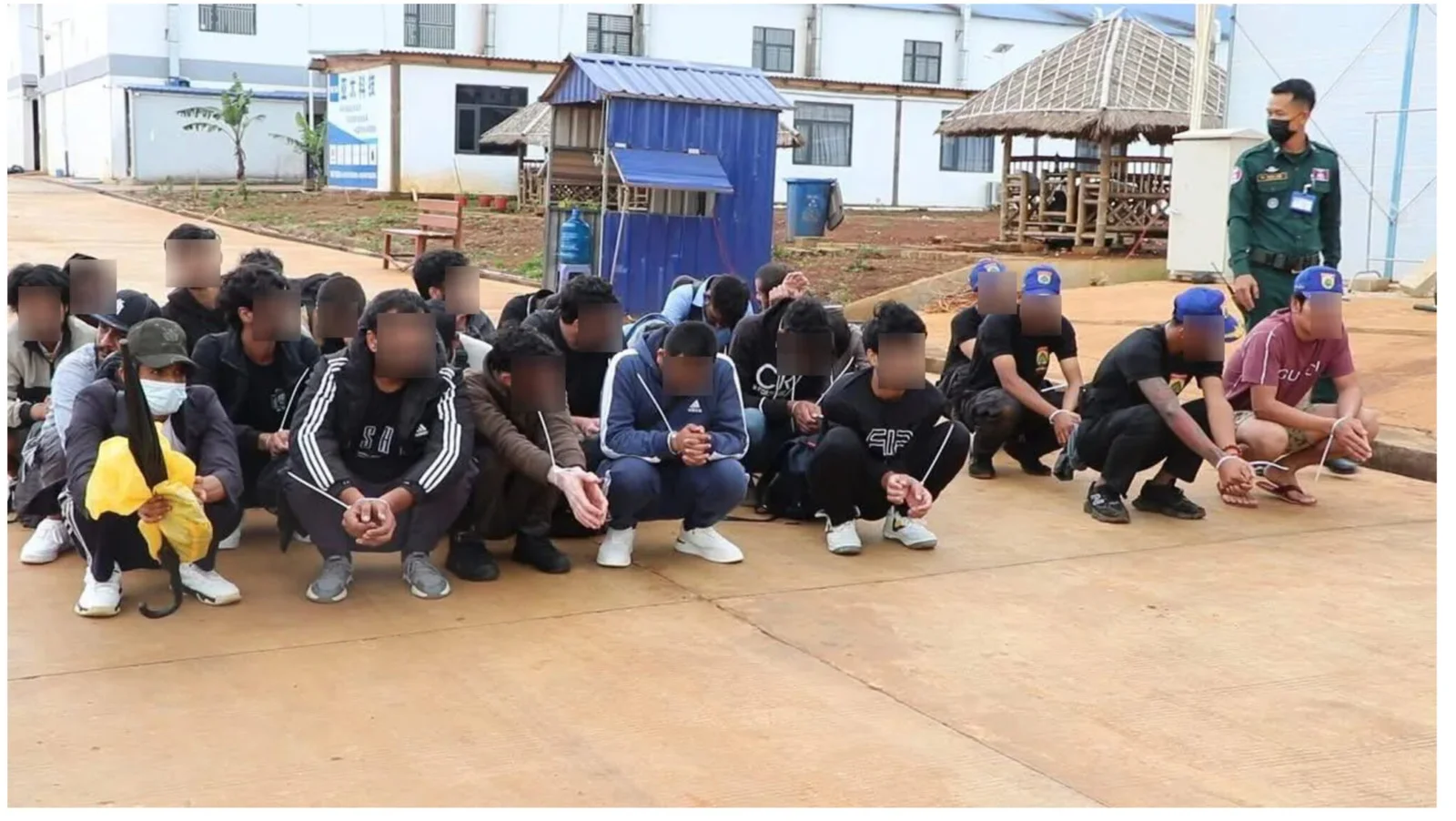
In a dramatic escalation of efforts to combat the rising tide of cybercrime, Cambodian authorities have launched one of Southeast Asia’s largest crackdowns, arresting over 3,000 individuals, including 105 Indian nationals. Spanning 15 days from June 27 to July 22, 2025, this operation targeted sophisticated cyber-scam networks operating across 138 locations in Phnom Penh and 16 other provinces. The crackdown, ordered by Prime Minister Hun Manet, has exposed a sprawling underworld of digital fraud, human trafficking, and forced labor, raising questions about the government’s previous inaction and the global implications of such crimes.
The Operation Unveiled
The nationwide campaign was triggered by mounting international pressure, including inputs from India’s Ministry of Home Affairs (MHA), Ministry of External Affairs (MEA), and the Indian Cyber Crime Coordination Centre (I4C). Cambodian police conducted raids that led to the detention of 3,075 suspects, comprising 606 women and individuals from over 20 countries. Among the arrested were 1,028 Chinese nationals, 693 Vietnamese, 366 Indonesians, 105 Indians, 101 Bangladeshis, 82 Thais, 57 Koreans, 81 Pakistanis, 13 Nepalese, 4 Malaysians, and others from the Philippines, Laos, Cameroon, Nigeria, Uganda, Sierra Leone, Mongolia, Russia, and Myanmar. The operation uncovered a vast array of evidence, including computers, laptops, mobile phones, drug processing equipment, ecstasy powder, pills, weapons, and fake police uniforms, including those mimicking Indian and Chinese law enforcement.
Nature of the Cybercrime Networks
These cyber-scam operations, often linked to Chinese organized crime groups, operated from fortified compounds where victims were lured with false job offers. Once ensnared, they were subjected to brutal conditions, including torture and forced labor, with escape attempts met with severe punishment or death. The United Nations estimates that over 100,000 people are trapped in such conditions across Cambodia, contributing to an annual global scam revenue of approximately $40 billion. The scams ranged from fake investment schemes and cryptocurrency frauds to romance traps and “digital arrests,” where fraudsters posed as law enforcement to extort money from unsuspecting victims worldwide.
The Indian Connection
The involvement of 105 Indian nationals has drawn significant attention, prompting swift action from the Indian government. Many of these individuals were reportedly lured to Cambodia with promises of lucrative IT jobs, only to be coerced into cybercrime activities. The MEA and Indian Embassy in Phnom Penh are coordinating with Cambodian authorities to facilitate the repatriation of these individuals. This follows earlier efforts in 2024, when approximately 250 Indians were rescued from similar schemes, highlighting a persistent trafficking pipeline targeting vulnerable job seekers from South Asia.
Government Response and Criticism
Prime Minister Hun Manet’s directive emphasized the need to protect “security, public order, and social safety,” with stern warnings to law enforcement and military officials of termination for non-compliance. The crackdown has been touted as a major success, with authorities seizing critical digital infrastructure used in the scams. However, skepticism abounds. Critics, including Amnesty International, argue that the Cambodian government has long turned a blind eye to these activities, with reports suggesting that influential elites may have profited from the cybercrime economy. The U.S. imposition of sanctions on tycoon Ly Yong Phat for ties to forced labor further fuels allegations of state complicity.
Broader Implications
This crackdown occurs against a backdrop of heightened regional tensions, particularly with Thailand, where border disputes have strained diplomatic relations. The global reach of these cybercrime networks underscores the need for international cooperation, yet Cambodia’s history of inaction raises doubts about the sustainability of this effort. The involvement of multiple nationalities suggests a transnational challenge that requires coordinated action beyond national borders. For India, the arrests highlight the urgency of addressing trafficking networks and strengthening advisories against fake job offers in Southeast Asia.
Impact on Victims and Society
The human cost of these operations is staggering. Victims, often from impoverished backgrounds, face exploitation, psychological trauma, and physical harm. The seizure of fake uniforms indicates the sophistication of these scams, which exploit trust in official institutions. For the arrested Indians, the path to repatriation offers hope but also underscores the need for better pre-employment screening and support systems to prevent future entrapments.
Conclusion
Cambodia’s cybercrime sweep, resulting in over 3,000 detentions including 105 Indians, marks a significant moment in the fight against digital fraud. While the operation exposes the scale of the problem, it also invites scrutiny of the government’s past role and the effectiveness of current measures. As India works to bring its citizens home and global authorities grapple with the $40 billion scam industry, this event serves as a stark reminder of the dark underbelly of the digital age. The true test lies in whether this crackdown leads to lasting reform or remains a performative gesture amid entrenched interests.
Comments are closed.