
China pushes Iran war diplomacy to project global leadership, but US remains uninterested

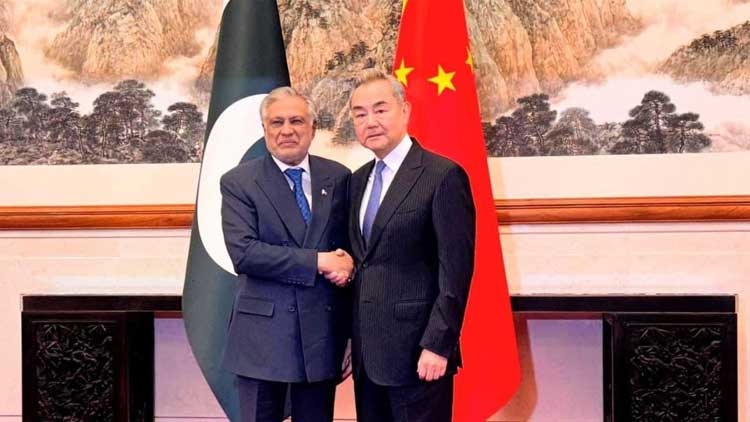
China is intensifying its diplomatic push on the Iran war, unveiling a five-point proposal with Pakistan, rallying backing from Gulf nations and opposing a United Nations plan to authorize force to reopen the Strait of Hormuz.
The effort marks Beijing’s latest attempt to assert a larger global role, though analysts say it may remain largely rhetorical, with the United States showing little interest. “The war with Iran is the priority of all countries in and outside the region,” said Sun Yun of the Stimson Center, calling it an opportunity for China to showcase leadership.
Others are more skeptical. Danny Russel described Beijing’s diplomacy as “performative,” likening its proposal to its 2023 Ukraine plan — heavy on rhetoric but light on action. He argued China is positioning itself as a responsible peace broker in contrast to what it portrays as a reckless Washington.
The Donald Trump administration, however, appears unenthusiastic about Chinese mediation. US officials say Washington has little appetite for third-party involvement that could elevate China’s global standing, though its stance could shift depending on Trump’s engagement ahead of a planned summit with Xi Jinping.
For Beijing, there is also an incentive to see the conflict ease before Trump’s expected visit to China in May, after an earlier trip was postponed due to the war.
Despite positioning itself as a mediator, China has so far been relatively insulated from disruptions in the Strait of Hormuz, thanks to diversified energy sources, strategic reserves and limited reliance on Iranian oil. It is also coordinating with Iran to allow passage of Chinese-flagged vessels through the waterway, even as global prices surge.
Still, analysts warn a prolonged conflict could hurt China’s export-driven economy through higher energy costs and shipping disruptions. Ali Wyne said Beijing also sees an opportunity to frame itself as helping resolve a crisis it views as driven by US policy missteps.
China has ramped up diplomatic outreach since the war began. Foreign Minister Wang Yi has held talks with counterparts across the region — including in Russia, Oman, France, Israel, Saudi Arabia and the United Arab Emirates — urging de-escalation and offering China’s role in peace efforts.
Beijing has also lobbied against a proposal backed by Bahrain at the UN that could allow military force to secure the strait, arguing such steps risk escalating the conflict. Alongside Russia, China has warned that such a mandate could be exploited to widen the war.
While Bahrain has since softened its proposal to focus on defensive measures, a vote has been delayed. China maintains that only a ceasefire can resolve the crisis — though its joint plan with Pakistan has so far been met with muted response from Washington, with US officials viewing it as a broad appeal for diplomacy rather than a concrete roadmap to peace.
Comments are closed.