
Climate Change Crisis: Understanding Its Causes, Effects, and Solutions

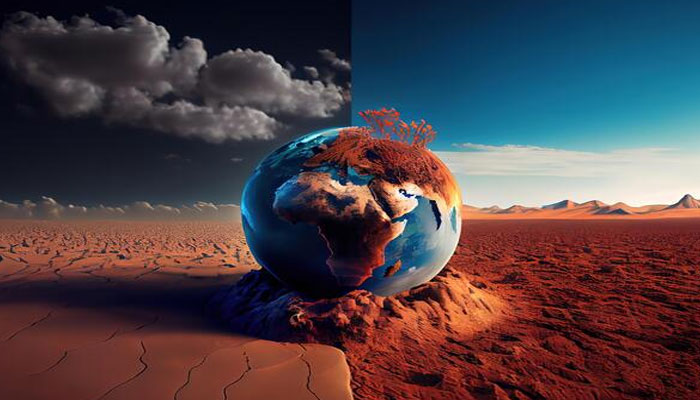
Climate change refers to long-term shifts in global or regional climate patterns, primarily caused by human activities.
While the Earth’s climate has naturally varied over time, the rapid warming observed in recent decades is largely due to greenhouse gas emissions from industrialization, deforestation, and the burning of fossil fuels.
Key Causes of Climate Change
Greenhouse Gas Emissions: Carbon dioxide (CO₂), methane (CH₄), and nitrous oxide (N₂O) trap heat in the atmosphere, leading to global warming.
Deforestation: Cutting down forests reduces the planet’s ability to absorb CO₂.
Industrial Pollution: Factories and vehicles release harmful gases that accelerate climate change.
Agriculture: Livestock produce methane, while synthetic fertilizers release nitrous oxide.
Urbanization: Expanding cities increase energy use and heat retention, intensifying the warming effect.
Impacts of Climate Change
Rising Temperatures: Increased frequency of heatwaves and scorching summers.
Melting Ice & Sea Level Rise: Threatening coastal cities and islands worldwide.
Extreme Weather Events: More frequent hurricanes, floods, droughts, and wildfires.
Ecosystem Disruption: Wildlife migration, habitat loss, and risk of extinction for vulnerable species.
Human Health Risks: Heat stress, respiratory issues, and spread of vector-borne diseases.
Solutions to Combat Climate Change
Transition to Renewable Energy: Solar, wind, and hydroelectric power reduce reliance on fossil fuels.
Energy Efficiency: Using efficient appliances, vehicles, and buildings lowers emissions.
Reforestation: Planting trees restores natural carbon sinks.
Sustainable Agriculture: Eco-friendly farming techniques help reduce methane and nitrous oxide emissions.
Policy and Global Action: International agreements like the Paris Accord aim to limit global warming and promote sustainability.
Adapting to Climate Change
Even with mitigation, some effects of climate change are unavoidable. Adaptation measures include:
- Building flood-resistant and climate-resilient infrastructure.
- Implementing effective water management systems during droughts.
- Strengthening disaster preparedness and early warning systems.
Conclusion
Climate change is a global crisis with far-reaching consequences for the environment, wildlife, and human societies. Immediate action—through both mitigation and adaptation—is essential to limit its impacts and secure a sustainable future for generations to come.
Comments are closed.