

CJP targets Election Commission over SIR, gives CEC Gyanesh Kumar 48-hour ultimatum
The Cockroach Janta Party (CJP) has stepped up its campaign against the Election Commission, demanding Chief Election Commissioner Gyanesh Kumar’s resignation within 48 hours and threatening a nationwide agitation followed by another protest at Delhi’s Jantar Mantar.
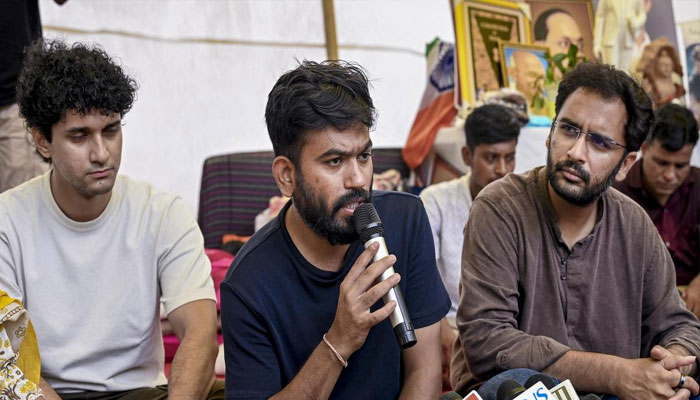
At a press conference on Thursday, CJP national convenor Abhijeet Dipke said the organisation would begin protests across the country if Kumar did not quit. He described the proposed Delhi demonstration as “Jantar Mantar 2.0”, referring to the group’s earlier protest over the NEET examination controversy.
The group has also launched an “Election Commission Thik Karo” campaign, focusing on the Special Intensive Revision (SIR) of electoral rolls and what it describes as concerns over voter exclusions, registration procedures and the management of electoral data.
Why has CJP taken on the Election Commission?
The campaign follows an Indian Express investigation that reported 14 recorded objections by Election Commissioners Sukhbir Singh Sandhu and Vivek Joshi over a 10-month period. The objections reportedly covered issues including changes to Form 6, voter additions and deletions, the SIR exercise and the centralisation of electoral-roll data.
The Election Commission has acknowledged the existence of the notes but rejected the suggestion that they necessarily reflected a breakdown within the poll panel. It said differing views, technical suggestions and internal checks were part of its regular decision-making process and described the recorded observations as standard institutional practice.
CJP has nevertheless demanded that the Commission publish the objections and its responses so the issues can be independently examined.
Three issues highlighted by CJP
CJP co-convener Saurav Das identified three areas that the organisation wants scrutinised.
The first concerns the online Form 6 process used by people seeking inclusion in electoral rolls. CJP has questioned an additional declaration requiring new applicants to provide information about their own or their parents’ presence in previous SIR rolls. The reported objections by Election Commissioners included concerns over this change.
The second issue relates to appeals filed by voters excluded during the SIR process in West Bengal. CJP has sought greater transparency over the handling of these cases and the legal steps taken by the Election Commission.
The third concerns the centralisation of electoral-roll data. Das has questioned how decisions affecting voter registration, deletion and access to electoral databases are authorised and recorded.
The reported internal objections also included concerns over the centralisation of electoral-roll systems and access to electoral data.
CJP questions voter exclusions
The organisation has focused its campaign on the exclusion of more than 13 crore names from draft electoral rolls across 30 states and Union Territories during the SIR exercise.
Dipke alleged that the Commission must explain the basis for each exclusion and provide affected voters with a transparent mechanism for review.
CJP co-convener Ashutosh Ranka also questioned how names could be removed without first ensuring what he described as an accessible remedy for affected citizens.
What does CJP want?
Apart from seeking Kumar’s resignation, CJP has called for an independent investigation into decisions taken during the SIR exercise, including identifying officials responsible for disputed changes and directives.
The organisation has also demanded that further SIR-related exclusions be halted and that the January 2025 electoral rolls and relevant SIR records be secured. It wants the records placed before the Supreme Court or an independent judicially supervised inquiry.
CJP has additionally called for changes to the system governing the appointment of the Chief Election Commissioner and other Election Commissioners. It wants the 2023 appointment law repealed and replaced with a framework involving wider institutional and civil-society participation.
The group has also asked Sandhu and Joshi to publicly explain their recorded objections and urged the Election Commission to release the relevant notes, responses and supporting records.
CJP’s campaign expands beyond SIR
The Election Commission campaign marks another phase in CJP’s evolution from an online platform into a pressure group. The organisation has previously campaigned over the NEET examination controversy and has also sought greater accountability over primary schools and healthcare facilities.
The group says electoral accountability is central to those efforts because, in its view, demands for administrative change are difficult to pursue if there are unresolved questions about the electoral system.
The Election Commission, meanwhile, has maintained that differing observations among its members are part of institutional deliberations and has described its decision-making process as functioning within the normal checks and balances of the poll panel.
Comments are closed.