

For the 33rd consecutive year, the United Nations General Assembly (UNGA) will take up Cuba’s annual resolution demanding an end to the decades-old US blockade on the island nation.
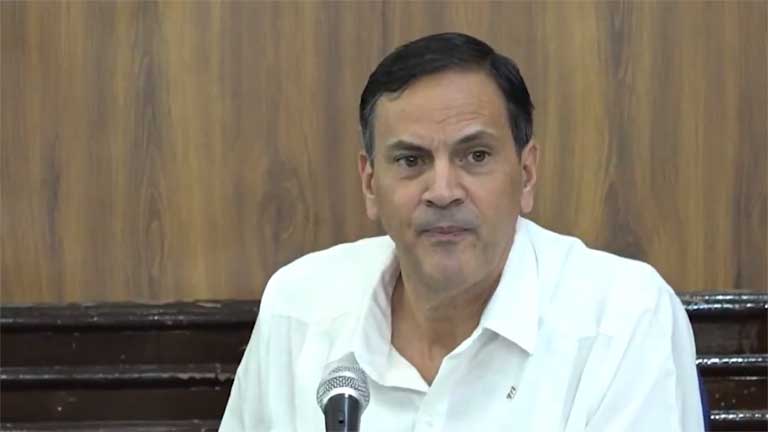
The debate and vote are scheduled for October 28–29, 2025. Speaking at a press conference at the Press Club of India on Thursday, Cuba’s Ambassador to India, Juan Carlos Marsan Aguilera, expressed confidence that India — described as a “steadfast friend of Cuba” — would again support the resolution.
“Last year, 183 countries voted in favour of our resolution. Only the United States and Israel opposed it, while the United Arab Emirates abstained,” Aguilera said.
Presenting the text of the resolution, he called the 65-year-old US economic, commercial, and financial blockade a policy of “political hostility and extraterritorial aggression” that continues to be the “main barrier to Cuba’s progress and development.”
The resolution cites statements by US officials that, according to Havana, reveal Washington’s goal of “cutting off all sources of foreign revenue” for Cuba by targeting its tourism, remittances, medical missions, and trade. It also accuses the US of intimidating investors and obstructing Cuba’s global partnerships.
Recalling the origins of the blockade, Aguilera said it was imposed in retaliation for the 1959 Cuban Revolution, noting that “before the Revolution, nearly 70 percent of Cuban land was owned by US corporations.”
The document also condemns Cuba’s continued inclusion on Washington’s list of “state sponsors of terrorism,” calling it “false, unjustified, and politically motivated.” It points out that Cuba was briefly removed from the list during the Obama administration, only to be reinstated under former President Donald Trump.
Highlighting the humanitarian impact, the resolution says the blockade has severely restricted Cuba’s access to food, medicines, and fuel. It adds that international banks and suppliers often avoid transactions with Cuba due to fear of US penalties.
It estimates the economic cost of the blockade as follows:
Two months of losses equal USD 1.6 billion, the sum required to provide annual family food rations.
Four months of losses equal USD 2.85 billion, enough to renew the national transport fleet.
Sixteen days of losses equal USD 339 million, sufficient to cover the country’s essential medicine needs for a year.
Ambassador Aguilera said the near-unanimous support the resolution receives every year demonstrates “the world’s rejection of unilateral coercive measures.” He added, “We are confident that India and the overwhelming majority of nations will once again vote in favour of our resolution, standing on the side of justice, sovereignty, and international solidarity.”
Comments are closed.