
Delhi’s Pollution Battle Takes a Back Seat as Residents Adapt to Toxic Air

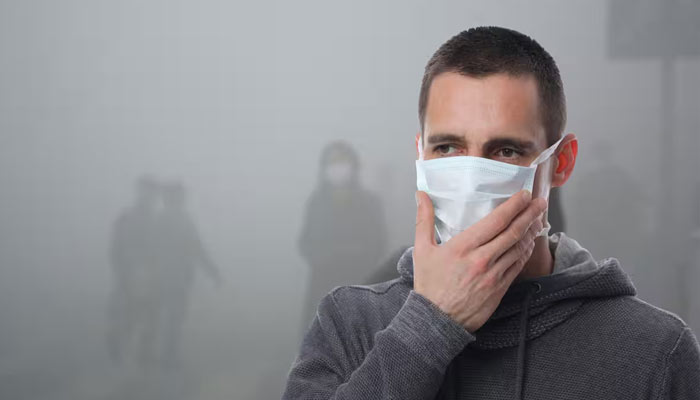
Delhi’s Pollution Crisis: Hospitals See Rising Respiratory Cases as Residents Struggle to Breathe
The worsening air quality across Delhi-NCR is no longer just an environmental concern. It has become a recurring health emergency, forcing residents to change their lifestyles, seek medical treatment and, for those who can afford it, leave the region during the worst months of pollution.
The scale of the problem becomes particularly visible after Diwali, when firecracker emissions add to the already polluted atmosphere. In Gurugram, families were seen wearing surgical masks while bursting crackers with their children, highlighting the growing contradiction between awareness of pollution and the activities contributing to it.
The consequences were evident the following morning at some of the region’s leading hospitals, including Medanta and Max Healthcare, where patients were reporting respiratory discomfort, persistent coughing and breathing difficulties.
At Medanta, the outpatient department was filled with people coughing. Dr Bornali Datta, Director of Respiratory and Sleep Medicine, said emergency and outpatient cases involving airway problems increased by at least 30 per cent after Diwali. She noted that a similar pattern had been observed every year over the past five to ten years.
Patients with asthma and chronic obstructive pulmonary disease (COPD) were arriving with breathlessness, wheezing and bronchospasm.
More concerning, however, was the increasing number of people who had never previously experienced respiratory problems but were now developing persistent winter coughs. According to Dr Datta, prolonged exposure to polluted air over four to five months each year could contribute to asthma-like symptoms and COPD in some individuals.
She advised people not to postpone medical consultations while waiting for air quality to improve, as pollution levels often remain unhealthy for several months.
Families Forced to Escape Delhi’s Winter Pollution
For some residents, leaving Delhi-NCR during the pollution season has become an annual necessity.
Raj Hajela, who visited Medanta, said allergy tests had indicated sensitivity to almost everything in the city’s environment. His family had previously made it a routine to relocate after Diwali, spending the last couple of years in Dubai. His youngest son, who experienced similar respiratory problems, is now studying in Canada and has seen an improvement in his condition.
Other visitors had equally difficult experiences.
Avinash and his wife Lakshmi, who travelled from Nepal for her bronchial asthma treatment, said they regretted visiting India during Diwali. Since both work, the festival period was the only convenient time for their trip. However, pollution forced them to remain indoors for most of their stay.
Avinash said dust and smoke made outdoor movement difficult even with masks. Lakshmi pointed out that although Diwali is celebrated in Nepal too, the festival traditionally focuses on earthen lamps and flowers rather than firecrackers. She appealed to people to consider patients who struggle to breathe before setting off crackers.
At Max Hospital, 70-year-old retired engineer PN Gupta described how his wife experienced a racing heartbeat whenever pollution levels increased. The family initially suspected a cardiac problem, but medical examinations ruled it out.
He observed that she felt better when travelling outside the NCR, including during visits to Bengaluru and abroad. The experience, he suggested, reflected a growing divide between people who can temporarily escape polluted cities and those who have no such option.
Doctors at Fortis Memorial Research Institute were also dealing with the familiar seasonal increase in respiratory complaints. Dr Manoj Kumar Goyal, Head of Pulmonary Disease, reported cases involving cough, fever, pneumonia and worsening lung conditions. He felt the patient rush was somewhat lower than the previous year because pollution levels were comparatively less severe.
Pollution’s Impact Extends Beyond the Respiratory System
Medical experts warn that the damage caused by polluted air is not restricted to the lungs.
Dr Ambrish Mithal, Chairman of Endocrinology and Diabetes at Max Healthcare, explained that PM2.5 particles are small enough to penetrate deep into the respiratory system and enter the bloodstream. Their presence can trigger inflammation, damage blood vessels and contribute to insulin resistance. They may also directly affect pancreatic function.
He referred to research conducted by the US Centers for Disease Control and Prevention (CDC) and the Madras Diabetes Research Foundation, which followed participants in Chennai and Delhi for up to seven years. The findings indicated that even one month of exposure to air pollution could increase blood sugar levels.
The issue is particularly significant for India, which has one of the world’s largest diabetic populations.
Dr Mithal also highlighted concerns surrounding pregnancy, although he clarified that the available evidence indicates associations rather than establishing a direct causal relationship. Studies have linked exposure to polluted environments with lower birth weights, restricted foetal growth and an increased risk of premature delivery.
He acknowledged that recommending air purifiers and walks in parks away from busy roads was not a practical option for everyone, describing such advice as elitist given the financial limitations faced by many families.
Children Face Long-Term Health Consequences
Dr Anurag Agrawal of Ashoka University, a pulmonologist who himself suffers from asthma, described the persistent respiratory irritation experienced by Delhi residents as the ‘Delhi cough’.
He explained that fine particulate matter travels deep into the lungs, where immune cells known as macrophages absorb the particles and can remain burdened by them.
Agrawal also warned that pollution is associated with several other health complications, including increased blood pressure, a higher frequency of heart attacks and elevated cancer risks. He stressed that lung function lost because of prolonged damage may not fully recover.
Children are particularly vulnerable. Research indicates that exposure to polluted air can interfere with normal lung development. Agrawal also highlighted another indirect consequence: children increasingly avoid outdoor activities because of poor air quality, potentially affecting their physical activity and long-term health.
A Recurring Crisis Without a Lasting Solution
For journalists covering health and the environment, Delhi’s annual pollution crisis has become an increasingly familiar story. Every winter brings similar reports of hazardous air, overcrowded hospitals, emergency restrictions and assurances that the situation will improve.
Yet the underlying problem continues.
Air purifiers and N95 masks may offer some protection, but they cannot replace the need for clean air. Access to protection also depends heavily on financial resources. Some families can afford expensive filtration systems or relocate temporarily to places such as Dubai, while millions of others have little choice but to remain exposed.
The solutions to air pollution are already well established, including stricter enforcement of environmental regulations, control of construction dust, reduction of vehicle emissions and effective management of industrial and other pollution sources.
The challenge lies in implementing these measures consistently rather than relying on temporary restrictions whenever pollution reaches emergency levels.
Delhi-NCR’s air crisis is therefore not merely an environmental problem but a failure of public health protection and governance. Until sustained action produces cleaner air, residents will continue to face the consequences with every passing winter, while children risk growing up without experiencing the benefits of a healthy outdoor environment.
Comments are closed.