
Delhi’s pollution levels soar as cloud seeding experiment fails to clear the air

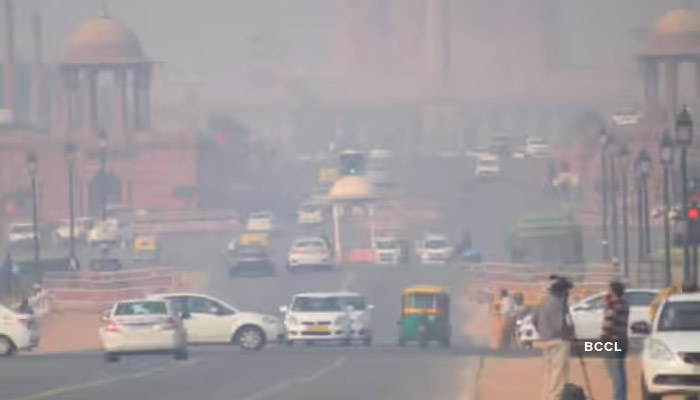
Delhi was engulfed in a thick layer of smog on Thursday as the capital’s air quality deteriorated sharply overnight, slipping deep into the ‘very poor’ category despite recent efforts to trigger artificial rain through cloud seeding.
According to data from the Central Pollution Control Board (CPCB), the city’s overall Air Quality Index (AQI) stood at 352, marking an 80-point jump from Tuesday’s average. Neighbouring cities including Noida, Ghaziabad, and Gurugram also reported a steep decline in air quality, with most areas recording AQI levels in the ‘very poor’ range. The India Meteorological Department (IMD) has forecast light showers in Noida, Faridabad, and parts of Haryana later in the day, which could offer temporary relief.
DELHI CHOKES UNDER THICK SMOG
Out of 38 air quality monitoring stations across Delhi, 32 recorded readings in the ‘very poor’ range, while several areas touched ‘severe’ levels. Vivek Vihar (AQI 415) and Anand Vihar (AQI 409) were among the worst-affected zones, while Wazirpur also reported dangerous pollution levels at 394.
For reference, an AQI between 0–50 is considered ‘good’, 51–100 ‘satisfactory’, 101–200 ‘moderate’, 201–300 ‘poor’, 301–400 ‘very poor’, and 401–500 ‘severe’.
CLOUD SEEDING FAILS TO BRING RELIEF
The Delhi government’s much-publicised cloud seeding experiment, conducted in collaboration with IIT Kanpur, failed to yield the desired outcome. Despite two rounds of seeding attempts earlier this week—the first such trial in over 50 years—not a single drop of rain was recorded.
Experts from IIT Kanpur explained that the experiment was hindered by insufficient moisture levels in the atmosphere. During the trials, humidity in the clouds was only 10–15%, whereas successful cloud seeding requires a minimum of 50–60% moisture content.
AIR POLLUTION CURBS IN PLACE
With the capital’s AQI consistently hovering between 300 and 400—almost 20 times above the safe limit—the authorities have already enforced GRAP Stage II restrictions. These measures include curbs on construction and demolition activities, as well as the ban on entry of non-BS-VI compliant commercial vehicles into the city starting November 1.
Officials are closely monitoring conditions and are prepared to escalate restrictions to GRAP Stage III if pollution levels continue to worsen. Environmental experts warn that stagnant weather conditions, combined with increased vehicular and industrial emissions, could keep pollution levels elevated in the coming days.
Comments are closed.