

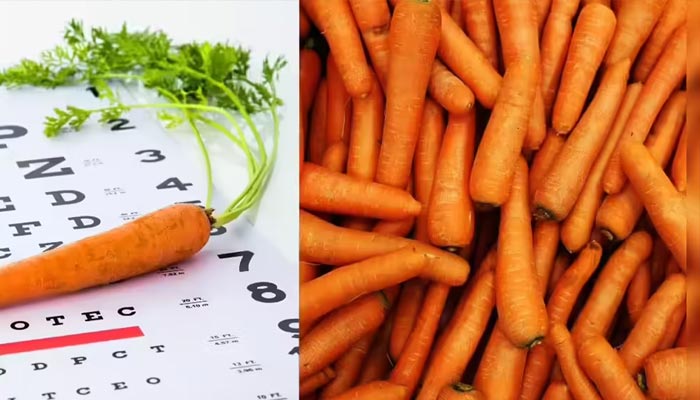
Carrots have long been celebrated as a natural remedy for weak eyesight. From childhood advice to popular folklore, the bright orange vegetable has been credited with the power to “sharpen” vision. But while carrots are undoubtedly nutritious, eye specialists say they don’t enhance eyesight beyond normal limits.
The confusion stems from the role of beta-carotene — the pigment that gives carrots their colour. According to Jeevan Kasra, Chairman at Steris Healthcare, beta-carotene is converted by the body into vitamin A, which is essential for maintaining healthy vision, especially in dim light. “Vitamin A deficiency can lead to night blindness and other serious visual issues. However, eating excess carrots will not improve eyesight if your vitamin A levels are already adequate,” he explains.
That’s the key difference: carrots help prevent deficiency-related problems, but they don’t boost visual power.
Why Vitamin A Is Important
Vitamin A supports the retina by helping produce rhodopsin, a pigment necessary for seeing in low-light conditions. When the body lacks sufficient vitamin A, night vision is often the first to decline.
Dr Neeraj Sanduja, ophthalmologist and eye surgeon at Viaan Eye Centre, Gurugram, clarifies that carrots cannot fix refractive errors. “They will not remove the need for glasses or correct myopia, hyperopia, or astigmatism. They simply help maintain normal eye function,” he says.
In short, carrots maintain — they don’t magnify — your natural vision.
The Origin Of The Myth
The strong association between carrots and exceptional eyesight dates back to World War II. British authorities claimed that their fighter pilots’ superior night vision was due to carrot consumption. In reality, advancements in radar technology were responsible. The story, however, stuck — and evolved into a widespread belief.
A Broader Approach To Eye Health
Nutritionist Preety Tyagi, founder of Nutrishifts, notes that carrots also contain antioxidants that protect the eyes from oxidative stress. But she emphasises moderation and variety. The body regulates how much beta-carotene it converts into vitamin A, meaning surplus intake does not translate into better eyesight.
For optimal eye health, she recommends including leafy greens, citrus fruits, nuts, seeds, and omega-3-rich foods in your diet. These nutrients collectively support long-term ocular wellness.
The Bottom Line
Carrots are good for your eyes — but only in the sense that they help prevent vitamin A deficiency and support retinal health. They won’t give you sharper vision, eliminate glasses, or reverse age-related eye conditions.
Maintaining good eyesight depends on a balanced diet, regular eye check-ups, proper screen habits, UV protection, and overall health management. Carrots are part of the solution — just not the miracle cure many believe them to be.
Comments are closed.