

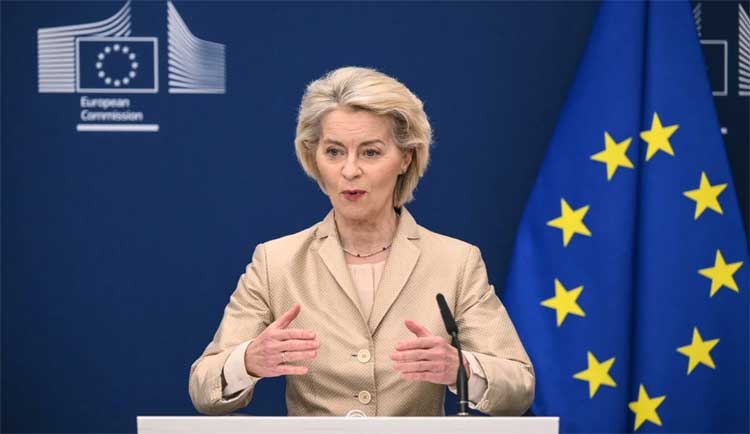
Ursula von der Leyen arrived in Australia on Monday, raising hopes that a long-delayed free trade agreement could finally be sealed after years of negotiations.
It marks her first visit since taking office and comes as both sides grapple with renewed energy vulnerabilities triggered by the Middle East conflict. She landed in Sydney for a meeting with the Governor-General and a traditional welcome ceremony, before heading to Canberra to meet Prime Minister Anthony Albanese and address parliament.
Von der Leyen is accompanied by EU trade commissioner Maros Sefcovic, fuelling speculation that both sides may be close to finalising the long-awaited deal.
However, key sticking points remain, including Australia’s push for greater access to European markets for lamb and beef. Canberra has floated dropping its luxury car tax on European vehicles in exchange for improved agricultural access, while disputes over geographical indication rules for cheese and wine also persist.
Australia has been working to diversify its export markets, reducing reliance on China after a 2020 trade dispute disrupted agricultural exports, and adapting to broader global trade tensions involving the United States. The European Union is currently Australia’s third-largest trading partner and second-largest source of foreign investment.
Trade Minister Don Farrell said last week that an EU deal could boost trade by Aus$10 billion in its first year, potentially making the bloc Australia’s second-largest trading partner.
The Middle East conflict is also expected to dominate discussions, as surging oil prices heighten concerns about global energy security. International Energy Agency chief Fatih Birol warned Monday that the world could face an energy crisis not seen in decades if tensions persist.
Von der Leyen has similarly described the crisis as a “stark reminder” of Europe’s vulnerabilities. Australia, heavily dependent on imported fuel, is also feeling the strain. While some petrol stations have run dry, Energy Minister Chris Bowen said the country remains “a long way” from needing rationing.
Comments are closed.