

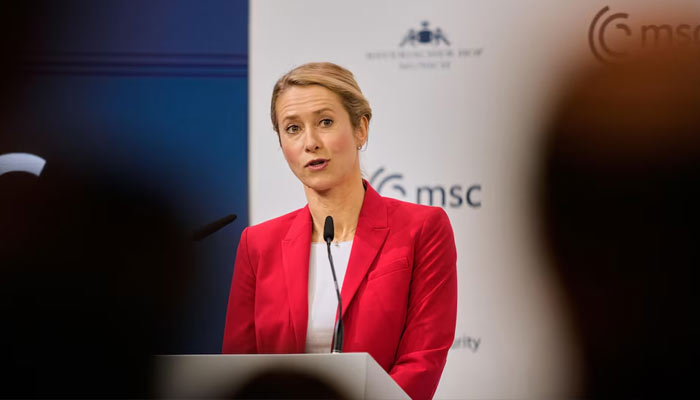
Europe has pushed back firmly against US claims that the continent is facing “civilizational erasure,” highlighting emerging tensions within the trans-Atlantic alliance.
Addressing the Munich Security Conference, EU foreign policy chief Kaja Kallas rejected language used in a recent US national security strategy that painted Europe as weakened by immigration, demographic decline and restrictions on political expression.
“Contrary to what some may say, woke, decadent Europe is not facing civilizational erasure,” Kallas said, dismissing what she described as “European-bashing.” She argued that the European Union remains an attractive model globally, pointing to continued international interest in closer ties with the bloc.
Her remarks came a day after US Secretary of State Marco Rubio sought to reassure allies at the same gathering. While Rubio avoided the sharper rhetoric used by Vice President JD Vance at last year’s conference, he maintained that Washington intends to recalibrate the partnership, particularly on migration, trade and climate policy.
The US strategy document released in December warned that Europe risks economic stagnation and a loss of national identity, arguing that such trends pose a deeper threat than financial decline alone. European officials have strongly disputed that assessment.
Rubio insisted that the United States does not seek to end the trans-Atlantic era, calling Europe central to America’s historical and strategic identity. However, he made clear that policy differences will persist. European leaders signaled they are equally committed to their positions. British Prime Minister Keir Starmer said Europe must defend “vibrant, free and diverse societies,” arguing that pluralism strengthens rather than weakens the continent.
Despite disagreements, Kallas struck a pragmatic tone about the future of the alliance. “We don’t see eye to eye on all issues,” she said. “But that doesn’t mean we cannot continue to work together.”
Comments are closed.