
Five European Nations Pledge Millions to Tap Ukrainian Expertise for Low-Cost Drone Defenses

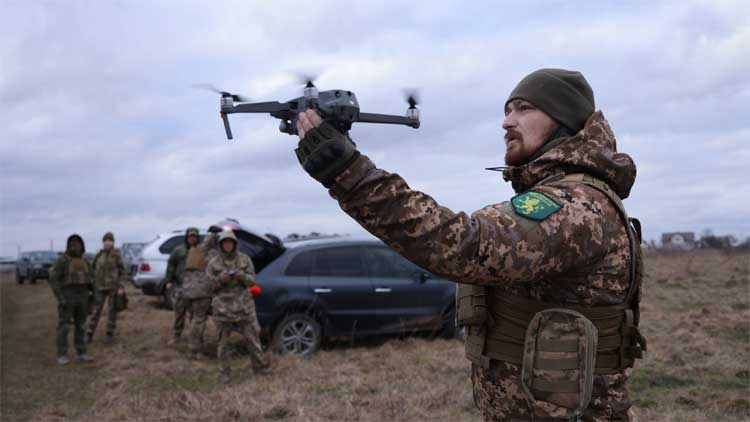
Five European powers have unveiled a joint initiative to develop low-cost air defense systems and autonomous drones, drawing on Ukrainian battlefield expertise accumulated during four years of war with Russia.
The program, backed by France, Poland, Germany, the United Kingdom, and Italy, reflects Europe’s growing urgency to counter increasingly frequent drone and missile threats near its borders.
The effort aligns with broader regional security projects, including proposals for a “drone wall” along sensitive frontiers to improve detection, tracking, and interception of unmanned aerial vehicles. European officials say the war in Ukraine has transformed modern combat, making affordable defensive technologies a strategic necessity rather than an option.
Poland has already deepened cooperation with Ukraine through joint training and manufacturing programs focused on drone warfare. Recent incidents involving unidentified drones near European borders and airports have intensified pressure on governments to adopt cheaper countermeasures. Traditional responses — such as scrambling advanced fighter jets — have proven disproportionately expensive against drones that may cost only thousands of dollars.
“The UK and our E5 partners are stepping up — investing together in next-generation air defense and autonomous systems to strengthen NATO’s shield,” said Luke Pollard. He emphasized that the central challenge is matching the cost of defense with the cost of emerging threats.
Poland’s defense minister Władysław Kosiniak-Kamysz confirmed that the countries signed an agreement under the LEAP (Low-Cost Effectors and Autonomous Platforms) framework. The program prioritizes joint production and procurement of inexpensive drone defense systems and AI-enabled strike platforms. “Combat technologies are evolving rapidly — we must respond just as quickly,” he said.
The push for cost-effective defenses gained momentum after episodes in which high-value military assets were deployed against relatively cheap drones. Officials argue that low-cost kinetic and electronic interceptors could neutralize such threats far more efficiently.
The initiative comes amid wider debates over Europe’s security posture and defense spending. EU foreign policy chief Kaja Kallas warned that geopolitical risks — including Russian aggression and instability in multiple regions — demand stronger European capabilities. She described the interceptor program as evidence of Europe’s commitment to reinforcing its own security while remaining aligned with NATO.
At the same time, political strains within the alliance have added to European concerns. US President Donald Trump has repeatedly criticized NATO’s funding structure, and past controversies — including disputes involving Greenland — have tested transatlantic cohesion. Though tensions have eased, analysts say such episodes have underscored Europe’s determination to reduce strategic vulnerabilities.
Comments are closed.