

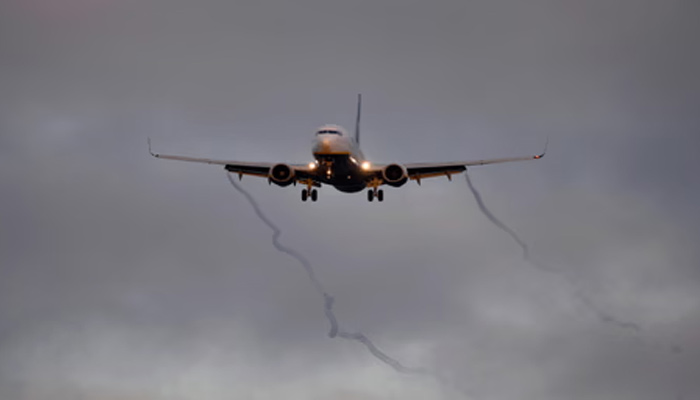
Climate Change Is Making Air Travel Bumpier.
The seatbelt sign flashes, trays rattle, and drinks spill—air turbulence is a common source of anxiety for flyers. And scientists warn that climate change is making these rough patches more frequent and severe.
Why Turbulence Matters
Turbulence is more than just an inconvenience; it’s the leading cause of in-flight weather injuries. Between 2009 and 2024, U.S. commercial flights recorded 207 injuries, mostly among unbelted passengers and crew. High-profile incidents—like last year’s Air Europa flight that injured 40, and a Singapore Airlines flight that left one passenger dead—highlight the risks.
“Modern aircraft can withstand turbulence, so the main danger is to occupants, not the plane,” says John Abraham, mechanical engineering professor at the University of St Thomas. Severe turbulence—around 1.5 times Earth’s gravity—occurs roughly 5,000 times annually over the U.S., according to Robert Sharman of the National Center for Atmospheric Research. It also forces pilots to adjust speed and altitude, increasing fuel consumption.
The Climate Connection
Turbulence comes in three forms: convective (from thunderstorms), mountain wave (over mountains), and clear-air turbulence (CAT), which is invisible and the most dangerous. CAT forms along jet streams—fast winds 10–12 km above Earth.
Climate change is warming the tropics faster than higher latitudes, strengthening jet streams and increasing wind shear—sharp vertical air shifts that trigger CAT. A 2024 study by Mohamed Foudad found turbulence frequency has risen 60–155% in regions including the North Atlantic, North America, East Asia, the Middle East, and North Africa, largely due to greenhouse gas emissions.
Looking Ahead
For every 1°C of warming, moderate CAT in the North Atlantic rises by 9% in winter and 14% in summer. Stronger storms fueled by climate change compound the problem. Mitigation includes optimizing flight routes, improving forecasting, using onboard LIDAR to detect turbulence, and encouraging passengers to keep seatbelts fastened.
Reducing greenhouse gas emissions remains crucial. Aviation contributes roughly 3.5% of human-caused warming, and while cleaner fuels are being explored, progress has been slow, according to the International Air Transport Association.
Comments are closed.