

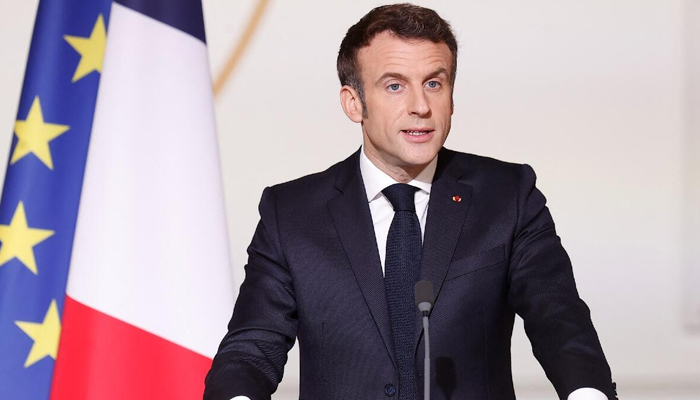
France has used its G7 presidency to launch a renewed global push against terror financing, announcing that Paris will host the fifth “No Money for Terror” conference.
The announcement was made during the G7 Foreign Ministers’ Meeting, where discussions focused on cross-cutting threats and national sovereignty. French diplomatic sources said the summit will aim to modernise the 2018 “Paris Agenda” — a global action plan to combat terror funding — by addressing emerging financial technologies and increasingly sophisticated illicit networks. The meeting included G7 nations along with key partners such as India, Brazil, South Korea and Saudi Arabia, reflecting a broader shift towards treating terrorism as a shared global challenge.
Why the ‘No Money for Terror’ Summit Matters
The upcoming conference marks a significant escalation in efforts to disrupt the financial lifelines of terrorist organisations. France has been a key advocate within the Financial Action Task Force (FATF), and the summit is expected to reinforce its central role in monitoring illicit financial flows.
The first conference in 2018 led to the adoption of the Paris Agenda, which increased pressure on countries failing to curb terror financing. Notably, Pakistan was placed on the FATF “grey list” from 2018 to 2022, facing sustained global scrutiny and economic pressure during that period.
By reviving this platform, France is signalling that stricter compliance with FATF norms will remain essential for participation in the global financial system.
Focus on Maritime Security and Trafficking
Beyond financial oversight, G7 talks also highlighted rising concerns over maritime security and narcotrafficking. France plans to launch a two-phase initiative targeting port security and coordinated action at sea.
A dedicated task force will be created under the Lyon-Rome Group to identify vulnerabilities in global port infrastructure. The initiative will have a strong focus on the Caribbean, which Paris identifies as a major transit hub for drug and arms trafficking.
To strengthen regional coordination, France will also host a security conference in Martinique later this year.
Critical Minerals Enter Security Agenda
The G7 also expanded its focus to include critical minerals, linking supply chains directly to national security and economic stability. These resources are vital for both digital technologies and the global energy transition, but their supply remains heavily concentrated.
France is pushing for stronger industrial partnerships between G7 countries and partners like India and Brazil to secure these supply chains.
By framing mineral access as a “cross-cutting threat,” the G7 aims to prevent geopolitical leverage over essential resources and ensure that the shift to clean energy does not compromise strategic autonomy.
Comments are closed.