
France Prepares for Fresh Nationwide Student Protests Amid Rising Unrest

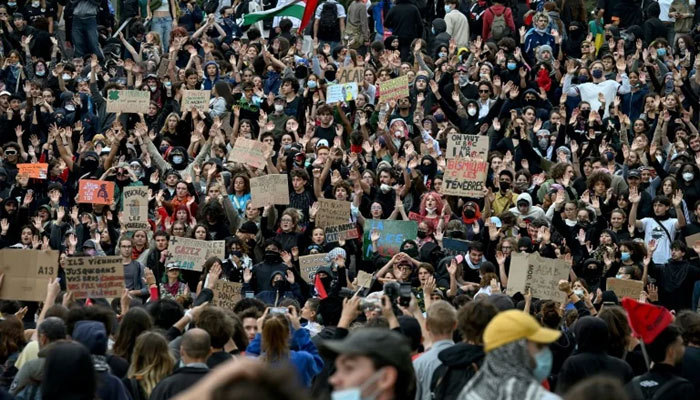
France Faces Another Wave of Student Protests Over School Conditions, Police Violence
France is preparing for another round of nationwide student demonstrations as anger over poor school facilities, teacher shortages and alleged police brutality continues to fuel protests across the country.
The latest demonstrations, supported by trade unions and the left-wing opposition party France Unbowed, were scheduled to include a march through Paris beginning at 1200 GMT on Tuesday, alongside rallies in several other cities.
The mobilisation follows protests on Thursday that reportedly attracted more than 70,000 participants nationwide and led to approximately 500 arrests.
The movement began in late September, with students demanding improvements to the country’s education system. Despite hopes among officials that the protests would subside ahead of the school half-term holidays, demonstrations and school blockades have continued, with some incidents turning violent.
School Blockades Continue Despite Decline in Closures
France’s education ministry reported that 130 of the country’s 3,700 lycees were closed on Monday. While the number of affected schools has declined, officials expressed concern about the severity of the violence surrounding the protests.
The ministry said eight teaching staff members were injured in incidents connected to the demonstrations, mainly in the Paris region and the cities of Bordeaux and Lyon.
A separate shooting near Marseille also drew attention on Monday. Police arrested a 14-year-old after a middle school headmaster and a teacher were wounded by gunfire from a hunting rifle. Authorities said the incident was unrelated to the student demonstrations.
Other reported incidents included fireworks fired through a tube, injuring school employees in Reims and a Paris suburb, as well as a police officer outside a school in Marseille.
Students Protest Teacher Shortages and Overcrowded Classrooms
Protesters say their demands centre on persistent problems affecting schools, including vacant teaching positions, deteriorating infrastructure, overcrowded classrooms and heavy academic schedules.
Leo, a 19-year-old graphic design student in Paris, said students felt their concerns and proposals were not being adequately considered by authorities and elected representatives.
“Students aren’t being heard enough… not their proposals to authorities and elected officials,” he said.
He also voiced concern about the police response, saying young demonstrators, many of them minors, were troubled by what they perceived as an unprecedented level of repression against a student movement.
Several protesters have suffered serious injuries during the demonstrations. One student reportedly lost a hand after being hit by a police stun grenade, while another lost several teeth after a tear-gas canister struck him at close range. A third protester reportedly lost an eye.
Rights groups and students have accused police of using disproportionate force. Authorities have also reported injuries among police officers and school staff during confrontations and other incidents.
More Than 6,800 People Taken Into Custody
The Justice Ministry said more than 6,800 people, most of them minors, had been taken into police custody during the protests.
Police have opened internal investigations into 24 allegations of brutality against demonstrators.
The arrests and reports of injuries have increased scrutiny of how authorities are handling the movement, even as officials seek to restore normal teaching activities and prevent further violence.
Government Promises 3,000 Substitute Teachers
In an effort to address complaints over staff shortages, the government has announced plans to deploy approximately 3,000 substitute teachers to 114 high schools facing the most severe disruptions due to teacher absences.
A government spokeswoman said on Monday that the process of assigning replacement teachers had begun.
However, the national students’ union has criticised the announcement as insufficient, dismissing the promised support as “crumbs”. It is calling for an additional €10 billion investment in lycees.
The government now faces pressure to deliver improvements while addressing the disruption caused by continuing school blockades.
Parents Concerned About Disrupted Education
The protests have also sparked debate among parents and students who worry that repeated school closures are affecting learning.
Some parents have questioned whether opposition political groups are using the demonstrations to advance their own agendas, while others have urged protesters to reopen school entrances.
Gladys, a mother who spoke under a pseudonym, described the blockades as undemocratic because they prevent students who want to attend classes from doing so.
Clara Juillet, a university student in Tours who said she had been unable to attend lessons for a week, also criticised the disruption, arguing that students outside the movement were being deprived of their education.
Macron Urges Patience and Dialogue
President Emmanuel Macron said on Monday that resolving the problems raised by students would require consultation and time. He called for restraint as the authorities consider how to respond to the demands.
“These are issues that deserve time, consultations, discussion and respect,” Macron said.
Tuesday’s student demonstrations are expected to precede wider public rallies on Saturday against the rising cost of living. Naila, a 17-year-old student in Rennes planning to join the protest, said she hoped the student movement would converge with the broader demonstrations.
With school disruptions continuing and tensions surrounding police action remaining high, France faces the twin challenges of addressing long-standing education concerns and ensuring that classrooms can return to normal operations.
Comments are closed.