
Frozen Code: Scientists Use Air Bubbles in Ice to Store Data, Decode Climate

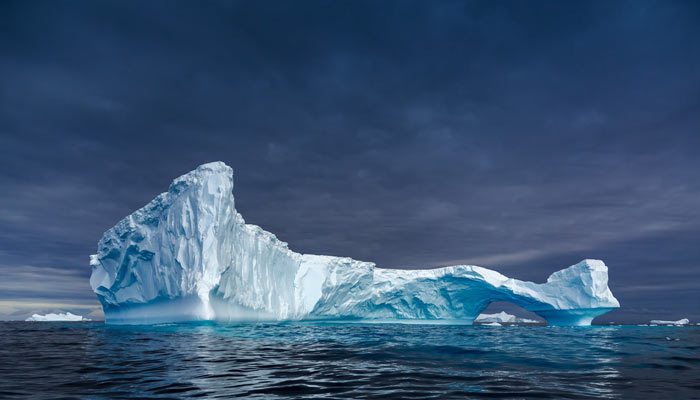
Frozen Code: Scientists Develop Ice-Based System to Store Data Using Air Bubbles.
In a breakthrough blending physics, coding, and curiosity, researchers from China, South Korea, and the Czech Republic have developed a novel method of storing information—by encoding it in air bubbles trapped in ice.
Published in Cell Reports Physical Science, the study outlines how the team manipulated freezing water to form patterns of bubbles that mimic Morse code or binary sequences. These bubble arrangements, once scanned and interpreted by a computer, can be translated into letters and numbers—turning frozen water into a surprising new medium for data storage.
“It is a totally new method for humans to record information,” said lead author Mengjie Song of the Beijing Institute of Technology.
While the technology isn’t expected to rival silicon chips or cloud storage anytime soon, researchers believe the method has exciting potential—ranging from aviation safety and environmental monitoring to lunar construction, where ice may be a key building material.
To create the code, scientists froze water between two acrylic sheets, carefully adjusting the freezing speed and angle. This controlled the formation of air bubbles—some rounded like pearls, others stretched like needles—allowing them to be arranged in specific sequences that encode information.
“It may sound futuristic,” said Jochem Meijer of the University of Chicago, “but it’s built on simple, observable physics. The cloudiness you see in regular ice is caused by tiny bubbles.” Indeed, the concept taps into techniques already known in craft ice-making, where bars strive to produce crystal-clear, bubble-free cubes. In this research, though, bubbles are precisely engineered to be part of the message.
Robin E. Bell, a Columbia University geophysicist not involved in the study, remarked on the creativity of the method:
“I could see it showing up in a James Bond movie—secret plans embedded in ice that melt into a smoothie to destroy the evidence.”
Beyond novelty, scientists say this technique could help improve our understanding of ice behavior—relevant for both infrastructure and planetary science. For example, encoding data in ice could assist in de-icing technologies or train AI models to study glacier bubbles for climate research.
“The level of control they’ve achieved with bubble shape and distribution is impressive,” said Virginia Tech’s Jonathan Boreyko. “This is how science often progresses—curiosity first, and then the applications follow.” As efforts to explore extreme environments like the Moon and polar regions accelerate, this unusual blend of coding and cryogenics may soon find a place beyond the laboratory—and even beyond Earth.
Comments are closed.