
Gadi Eisenkot Begins Coalition Push, Invites Netanyahu’s Likud Party for Government Talks

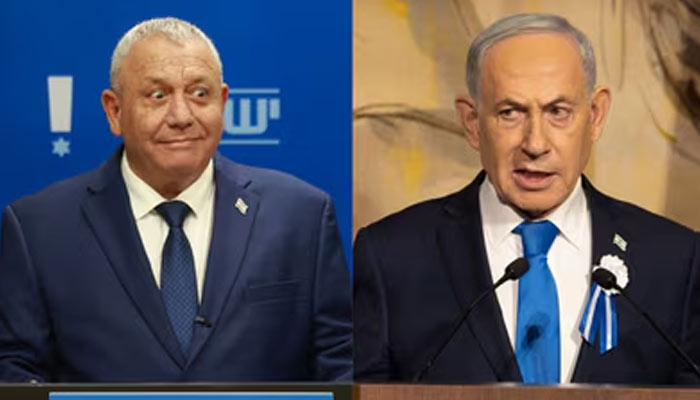
Israel Government Formation: Gadi Eisenkot Invites Netanyahu’s Likud for Coalition Discussions
Israel’s efforts to form a new government have entered a crucial stage, with Gadi Eisenkot, leader of the Yashar Party, reaching out to Prime Minister Benjamin Netanyahu’s Likud party for coalition negotiations.
The invitation, announced by Yashar on Saturday, is part of Eisenkot’s efforts to explore different political combinations and secure the parliamentary backing needed to establish the next government. Talks with Likud and other political groups are expected to begin on Sunday, November 22.
Eisenkot was entrusted with forming the government by Israel’s president on November 8. He has 28 days to complete the process, with a possible extension of another 14 days.
The October 27 election resulted in a fragmented parliament, with no party securing an outright majority. Against this backdrop, Eisenkot has said he wants to build the broadest possible governing alliance.
In its statement, Yashar said Eisenkot had instructed the party’s negotiating team to invite Likud representatives for an intensive series of discussions, starting with the meeting scheduled for Sunday.
Support from Arab parties strengthens Eisenkot’s position
Eisenkot received recommendations from 67 lawmakers to lead the government. These included 48 legislators from his political bloc and 19 representatives of Arab parties.
His parliamentary position received further support on November 17, when Matan Kahana of Yashar was elected speaker of the Knesset with backing from Arab lawmakers.
However, securing their continued support remains a complicated task. Eisenkot has not committed to including Arab parties in a formal coalition, although he has indicated that a minority government supported by them from outside parliament could be an option.
According to Israeli publication Haaretz, the Ra’am party, led by Mansour Abbas, is open to supporting a Yashar-led government without formally joining it. The party has eight lawmakers.
The Joint List, which has 11 parliamentary members, reportedly prefers a formal coalition arrangement, although it has extended support to Yashar in earlier parliamentary proceedings.
Eisenkot warns against prolonged political uncertainty
Eisenkot has made it clear that he does not want the government formation exercise to continue indefinitely.
In a post on X, he said he would present a new government to the Knesset for approval at the appropriate time. He also criticised Netanyahu’s caretaker administration, alleging that political considerations were becoming increasingly intertwined with military decisions.
He described the situation as dangerous and argued that Israel’s military priorities and operational schedules should not be influenced by political calculations.
Eisenkot also challenged lawmakers to decide whether they wanted a change in government or were prepared to take the country towards another election while Netanyahu remained caretaker prime minister.
Likud invitation does not mean alliance with Netanyahu
Although Eisenkot has invited Netanyahu’s Likud representatives for negotiations, he has maintained his opposition to serving in a coalition government alongside the caretaker prime minister.
The outreach is therefore aimed at exploring possible parliamentary arrangements rather than signalling a political reconciliation between the two leaders.
The negotiations beginning November 22 will be important in determining whether Eisenkot can assemble a viable government within the constitutional deadline. His biggest challenge will be balancing the demands of different political groups while securing enough support in the Knesset to take office.
Comments are closed.