

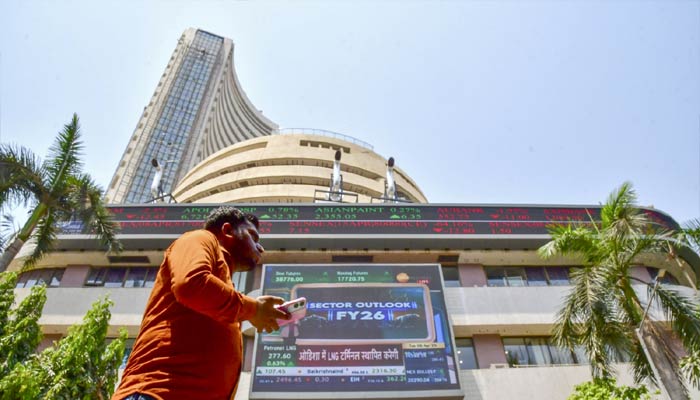
Ganesh Chaturthi 2025: Stock Market Closed Today, Trading to Resume Tomorrow.
Dalal Street witnessed a broad-based sell-off in its previous session as investor sentiment remained cautious ahead of the 50% tariff on Indian exports, which comes into effect today.
Both the National Stock Exchange (NSE) and Bombay Stock Exchange (BSE) are closed on Wednesday, August 27, in observance of Ganesh Chaturthi. Investors will have to wait until tomorrow when markets reopen to trade.
Why Is the Stock Market Closed Today?
Ganesh Chaturthi is a state holiday in Maharashtra. Since both NSE and BSE are headquartered in Mumbai, trading is suspended for the day. The official BSE holiday list for 2025 confirms the closure for August 27. This marks the second market holiday in August, after Independence Day on August 15.
Markets Affected by Today’s Closure
Trading is suspended across equities, equity derivatives, securities lending and borrowing, currency derivatives, and electronic gold receipts. The Multi Commodity Exchange (MCX) remains closed for the morning session from 9 am to 5 pm, with evening trading resuming between 5 pm and 11:30/11:55 pm. Several banks are also closed today as per the Reserve Bank of India’s holiday calendar.
Upcoming Stock Market Holidays in 2025
October 2: Mahatma Gandhi Jayanti / Dussehra
October 21: Diwali Laxmi Pujan
October 22: Diwali Balipratipad
November 5: Prakash Gurpurb Sri Guru Nanak Dev
December 25: Christmas
Market Outlook After the Holiday
Analysts expect continued pressure when trading resumes. Ajit Mishra, Senior Vice President of Research at Religare Broking Ltd, said:
“With the Nifty slipping below its immediate support at the 20-day exponential moving average and the banking index breaching its critical base around 54,900, further downside cannot be ruled out. We expect the index to fill the recent gap and retest its medium-term moving average around 24,600. Export-oriented sectors may continue to face selling pressure, while domestic demand-driven sectors such as FMCG and consumer discretionary could offer some stability. Traders should also monitor global market trends, foreign fund flows, and any policy measures addressing trade-related concerns.”
Comments are closed.