
Global Study Warns: Mountain Temperatures Rising 50% Faster Than Worldwide Rate
Globally, compared to lowlands, mountains were estimated to experience an enhanced warming of 0.21 degrees Celsius per century during 1980-2020.

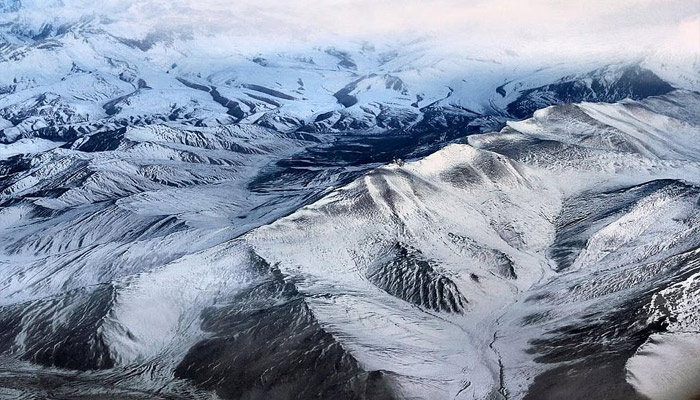
A new study has found that temperatures in high-elevation mountain regions — including the Himalayas — have risen almost 50% faster than the global average since 1950, sharply increasing risks for more than a billion people who depend on mountain snow and glaciers for water.
Published in Nature Reviews Earth and Environment, the research shows that between 1980 and 2020, mountain areas saw greater warming, reduced precipitation, and faster snow loss than lowland regions. Scientists estimate enhanced warming of 0.21°C per century, increased drying of 11.5 mm per century, and a decline in snowfall of 25.6 mm per century.
The study, led by the University of Portsmouth, examined “elevation-dependent climate change” — a trend where environmental changes intensify at higher altitudes due to shrinking snow cover, altered surface reflectivity, humidity shifts, and aerosol pollution from nearby lowlands.
“Mountains are undergoing rapid changes similar to the Arctic,” said lead researcher Nick Pepin. “At higher elevations, the rate of warming can become even more intense.”
Researchers noted that mid-elevation zones, where snowlines are steadily shifting upward, are warming the fastest. Aerosols transported from industrial regions in India and China are also accelerating melt when they settle on snow and ice.
Using global datasets and case studies from the Alps, Tibetan Plateau and High-Mountain Asia, the team found clear evidence that high-altitude warming has been consistently stronger than in lowlands. Climate models suggest this trend will continue through the century, though precipitation changes remain uncertain.
The consequences are significant. Rapid glacier decline in the Himalayas threatens water supplies for China, India and other downstream regions. Warmer temperatures are also turning snowfall into rain, increasing flood risks. Meanwhile, plant and animal species are being pushed higher up mountain slopes, in some cases running out of habitat.
“These shifts will fundamentally alter mountain ecosystems,” Pepin warned.
Comments are closed.