
Scientists Sound Alarm as Greenland Ice Loss Accelerates Rapidly

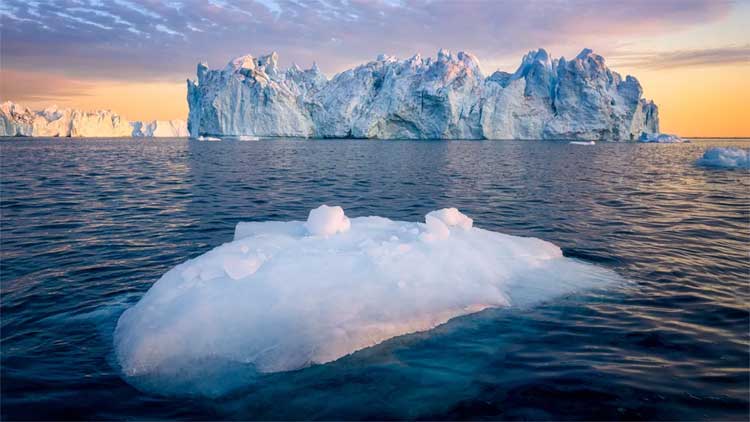
iExtreme melting of the Greenland ice sheet is accelerating sharply under the impact of climate change, with a marked rise in both frequency and intensity, according to a new study.
Research led by the University of Barcelona and published in Nature Communications shows that extreme melt events are becoming more widespread and severe across Greenland. Since 1990, the area affected by such episodes has expanded by roughly 2.8 million square kilometres per decade.
At the same time, meltwater production has surged—from 12.7 gigatons per decade between 1950 and 2023 to about 82.4 gigatons per decade in recent years.
Melting events intensify and spread
The most intense melting episodes have largely occurred in the modern era, with seven of the ten largest events recorded since 2000. Notable cases in August 2012, July 2019 and July 2021 stand out for their unprecedented scale.
The study finds that meltwater generation has increased significantly under similar atmospheric conditions—by about 25% compared to the 1950–1975 period, and up to 63% when all extreme events are considered.
Northern Greenland, in particular, has emerged as a hotspot of rapid change. Under high-emission scenarios, extreme meltwater anomalies in this region could triple by the end of the century.
Linking warming to extremes
Led by researcher Josep Bonsoms, with contributions from Marc Oliva, the study analysed melting events between 1950 and 2023 using a new framework developed by the ANTALP research group.
This approach combines atmospheric circulation patterns with regional climate modelling, allowing scientists to distinguish between warming-driven (thermodynamic) factors and changes in air circulation (dynamic factors).
The findings come amid growing global focus on Greenland—not just for its environmental significance, but also its geopolitical importance.
Bonsoms noted that the rapid transformation of the ice sheet has far-reaching consequences, including rising sea levels and potential disruptions to ocean circulation, while also placing the Arctic at the centre of evolving strategic and economic dynamics.
Understanding what drives these increasingly intense melt events is crucial for forecasting future risks and shaping informed climate policy.
Comments are closed.