

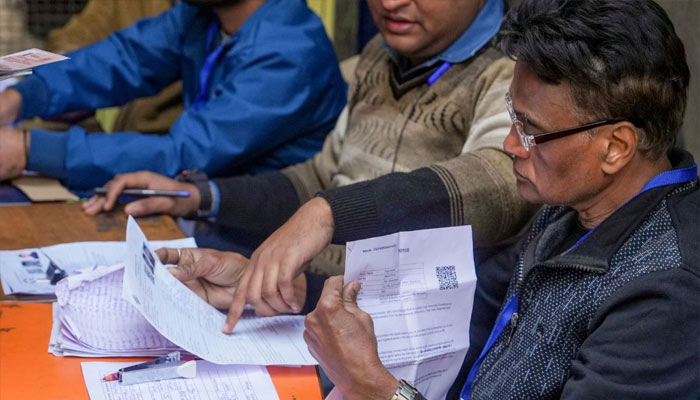
The Election Commission of India (ECI) has concluded the Special Intensive Revision (SIR) of electoral rolls in six states and three Union Territories, leading to substantial changes in voter data.
The Commission said the exercise aimed at removing ineligible entries while incorporating newly eligible voters after field verification. Gujarat recorded the highest net deletions in the country, with 68,12,711 electors removed. The state’s voter strength declined from 5,08,43,436 before the SIR to 4,40,30,725 after the revision — a 13.40% drop.
Madhya Pradesh followed with 34,25,078 deletions, bringing its electorate down from 5,74,06,143 to 5,39,81,065 (–5.97%). In Rajasthan, 31,36,286 names were struck off, reducing the rolls from 5,46,56,215 to 5,15,19,929.
Chhattisgarh saw 24,99,823 deletions (2,12,30,737 to 1,87,30,914), while Kerala recorded a fall of 8,97,211 voters (2,78,50,855 to 2,69,53,644). Goa’s electorate decreased by 1,27,468 names, from 11,85,034 to 10,57,566.
Among Union Territories, Andaman and Nicobar Islands witnessed 52,364 deletions (3,10,404 to 2,58,040), Puducherry recorded 77,367 deletions (10,21,578 to 9,44,211), and Lakshadweep saw a marginal reduction of 206 electors (57,813 to 57,607).
Officials clarified that the net reduction represents electors found ineligible — due to reasons such as death, permanent migration, or duplicate registrations — adjusted against newly added eligible voters. The Commission reiterated that electoral rolls remain dynamic, and citizens can continue to apply for corrections or fresh enrolment.
Final rolls have been published for Andaman and Nicobar Islands, Chhattisgarh, Goa, Kerala, Madhya Pradesh, and Rajasthan. Data for West Bengal, Uttar Pradesh, and Tamil Nadu is expected later this month. The next phase of the SIR process is slated to begin in April as part of the nationwide electoral roll verification programme.
Comments are closed.