

India, UK Sign Landmark FTA with Focus on Trade Growth, Mobility and Market Access.
India and the United Kingdom on Thursday signed the long-awaited Comprehensive Economic and Trade Agreement (CETA), a landmark free trade deal expected to double bilateral trade—currently at $56 billion—by 2030. The agreement aims to eliminate tariffs on nearly 99% of tariff lines, covering close to 100% of the total trade value between the two countries.
Under the deal, the UK will receive duty-free access on 90% of its tariff lines, accounting for 92% of its existing merchandise exports to India. In return, India secured key concessions on business mobility and safeguarded its sensitive sectors such as dairy, apples, edible oils, and certain vegetables by placing them on the negative list.
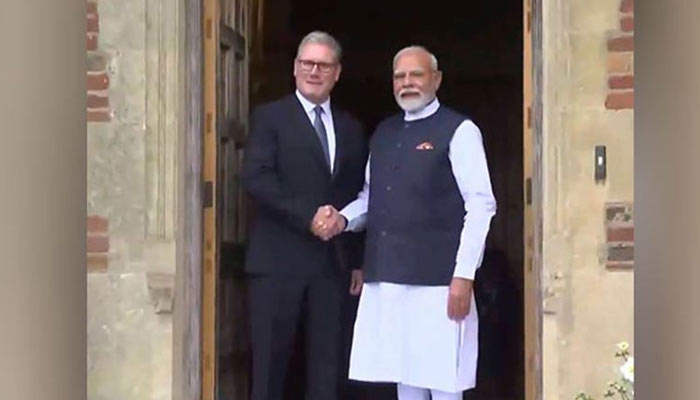
Prime Minister Narendra Modi, currently visiting London to endorse the pact, said, “We are committed to building a high-scoring, solid partnership.” UK Prime Minister Keir Starmer hailed the deal as a “landmark” agreement that would boost jobs, investment, and economic growth in the UK.
Key Gains for Both Sides
The deal resolves several contentious issues. For India, easing business mobility was crucial—especially in services, IT, education, and wellness. The UK, on the other hand, sought wider access for automobiles and agri-food products.
India successfully negotiated provisions to allow temporary entry for skilled professionals, including chefs, yoga instructors, classical musicians, contractual service providers, and investors. A quota of 1,800 professionals per year has been set for traditional Indian chefs, yoga instructors, and musicians, with temporary stays permitted up to 12 months in any 24-month period, or for the contract’s duration.
The UK government described these provisions as “temporary” and strictly for the delivery of services, not a pathway to immigration.
The agreement also formalises short-term business mobility for professionals from both countries. UK service providers in sectors such as engineering and accounting will be assured continued access to Indian markets.
Protecting India’s Agri Interests
While the UK gains wider access for beverages and processed agri-food items, India has maintained protections for sensitive domestic sectors. “The agreement takes fully into account the interests of Indian producers of sensitive agricultural products like dairy, vegetables, apples, and edible oils,” an Indian official said.
Major Boost for Indian Exports, MSMEs
Union Commerce Minister Piyush Goyal called the FTA a major win for India’s labour-intensive industries and rural sectors. “Duty-free access for about 99% of Indian exports unlocks nearly $23 billion in opportunities,” he said, highlighting the benefits for MSMEs involved in textiles, leather, footwear, gems & jewellery, toys, and marine products.
“This agreement marks a historic leap for women, artisans, and small-scale producers, providing them with better access to global value chains,” Goyal said. The FTA ensures duty-free exports for 95% of agricultural products and 99% of marine exports, supporting farmers and fisherfolk.
Manufacturing sectors such as engineering goods, electronics, pharma, chemicals, plastics, and food processing are also expected to benefit significantly from reduced tariffs and improved market access.
Services and Talent Mobility
India’s booming services sector stands to gain with easier access to the UK’s high-value markets. Goyal noted that IT professionals, educators, and healthcare workers would benefit from smoother entry protocols and mobility guarantees. A three-year exemption from the UK’s social security contributions—under the Double Contribution Convention—was also included, offering savings for both Indian employees and their companies operating in the UK.
“From village looms to tech labs, this FTA reflects our vision of inclusive growth and global integration,” Goyal added.
Comments are closed.