
Hungarians vote in landmark election closely watched by the EU, Russia, and the United States

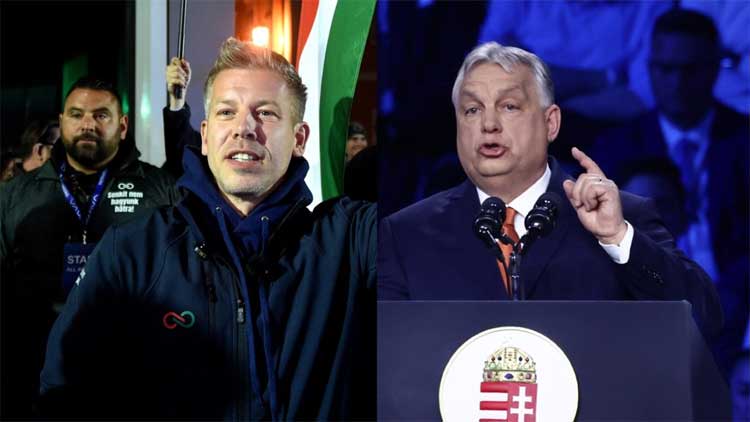
Hungarians head to the polls on Sunday in a pivotal election that could end Prime Minister Viktor Orbán’s 16-year grip on power, with potential ripple effects across Europe, Russia, and even the political landscape of the United States under Donald Trump.
Orbán, a nationalist and outspoken eurosceptic, has championed what he calls an “illiberal democracy” — a model that has influenced Trump’s MAGA movement and like-minded leaders in Europe. But after years of economic stagnation, rising living costs, and allegations of cronyism benefiting elites close to his government, public frustration appears to be mounting.
Recent opinion polls suggest Orbán’s ruling Fidesz party is trailing the insurgent centre-right Tisza party led by Péter Magyar by 7–9 percentage points, with Tisza polling around 38–41%.
Voting for the 199-seat parliament begins at 6 a.m. local time and ends at 7 p.m., in a contest closely watched in Brussels. European Union leaders have frequently criticised Orbán — a known ally of Vladimir Putin — over concerns about democratic backsliding, media freedom, and minority rights in Hungary.
For neighbouring Ukraine, the outcome could be especially significant. An Orbán defeat may unblock a €90-billion EU loan package seen as crucial to Kyiv’s war effort, while also weakening Moscow’s closest partner within the EU.
Framing the vote as a stark choice between “war and peace,” Orbán has warned voters that Magyar would draw Hungary into the Russia-Ukraine conflict — an आरोप the opposition leader strongly denies. Speaking to supporters in his hometown of Székesfehérvár, Orbán expressed confidence that Hungarians would ultimately “vote for safety.”
Despite endorsements from Trump allies — including a recent visit by Vice President JD Vance — as well as support from the Kremlin and far-right figures in Europe, Orbán’s campaign has been rattled by reports alleging ties between his government and Moscow, which he denies.
Meanwhile, Magyar, a former Orbán ally turned critic, has tapped into growing dissatisfaction, particularly among younger voters frustrated by corruption allegations and declining living standards. His campaign has framed the election as a defining moment for Hungary’s future direction.
Still, analysts caution that the outcome remains uncertain. A large pool of undecided voters, electoral boundary changes favouring Fidesz, and strong backing for Orbán among ethnic Hungarians abroad could all influence the final result. Scenarios range from a Tisza supermajority — potentially enabling constitutional changes — to a continued Fidesz-led government.
Even if Magyar’s party prevails, experts warn that dismantling Orbán’s deeply entrenched legal and institutional framework could prove a formidable challenge without a strong parliamentary majority.
Comments are closed.