
Hurricane Isaias Makes Landfall, Batters US Gulf Coast With Fierce Winds and Flood Threat

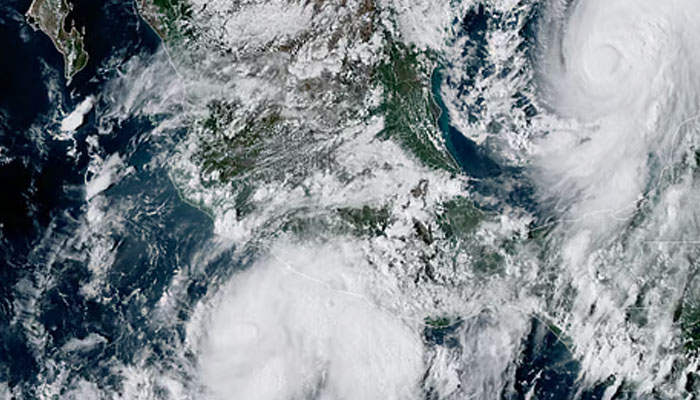
Hurricane Isaias Slams Florida, Alabama With 105-Mph Winds, Flooding and Storm Surge Threat
Hurricane Isaias struck the US Gulf Coast on Friday, battering Florida’s Panhandle and parts of Alabama with powerful winds, heavy rainfall and flooding, while officials warned residents of potentially life-threatening storm surges.
The first hurricane of the Atlantic season made landfall near Destin, Florida, with maximum sustained winds of 105 mph (169 kmph), the National Hurricane Center in Miami reported. The storm weakened shortly before reaching the coast and had been downgraded from hurricane status by early Saturday as its winds continued to lose strength.
Florida Governor Ron DeSantis urged residents to remain indoors and avoid travelling through flooded areas, warning that flash flooding would remain a serious threat.
“The storm is here. Buckle down at this point. Don’t be getting out on the roads,” DeSantis said at a news conference.
The storm swept across the low-lying Gulf shoreline, known for its white-sand beaches, holiday homes and waterfront businesses. Forecasters also warned of possible tornadoes across the Florida Panhandle and southern Georgia.
US President Donald Trump said officials were closely monitoring the hurricane. Speaking to reporters at the White House late Friday, he said the storm was being watched carefully and added that it was “under control.”
Flooding and Power Outages Hit Coastal Communities
Floodwaters inundated roads in Destin, while police in Pensacola urged residents to stay off the streets because of fallen trees and debris. The full scale of the damage was not immediately available, although photographs shared online showed downed trees and damaged power lines. A social media video also appeared to show strong winds tearing the roof off an inn in Pensacola.
Several counties in the Florida Panhandle temporarily suspended emergency response operations on Friday night because of dangerous weather conditions.
In southern Alabama, officials reported flooding, fallen trees and power lines in Mobile. Roads in Houston County were also closed because of hazardous conditions.
More than 664,000 customers in Florida and Alabama were without electricity early Saturday, according to poweroutage.com.
Residents Describe Destructive Winds
Tim Mowry, who remained at his home in Pensacola during the storm, said the wind sounded like a train whistle as it blew through a gap in his patio door.
His home lost electricity at around 4:30 pm, although a generator allowed him to continue receiving power. Floodwater accumulated in his backyard, and parts of his fence were torn down.
Despite the damage, Mowry said Pensacola had escaped the worst of the storm.
“As far as Pensacola-wise, we really got fortunate,” he said.
His son, who lives about 15 minutes away, attempted to drive to his home after losing power but turned back after encountering fallen trees and power lines blocking the roads.
Storm Surge Threat Prompts Evacuations
Forecasters warned that storm surges could reach 3 to 5 feet (0.91 to 1.52 metres) from Dauphin Island in Alabama to Florida’s Aucilla River.
Authorities cautioned that dangerous conditions could continue across the western Florida Panhandle, southern Alabama and southern Mississippi. Several counties ordered mandatory evacuations, while Mobile imposed a curfew through Saturday morning.
Dozens of Waffle House restaurants across the Florida Panhandle also closed as the storm approached. The Southern breakfast chain is known for remaining open during severe weather, making its closures a notable sign of the conditions.
Kelsei Frazier, a Florida native living in Pace, said the closures were unusual.
“We joke because if Waffle House is still open, then you know it’s not a bad hurricane, but all the Waffle Houses that I know of within at least a normal range from us are closed,” she said.
DeSantis warned that residents could face fuel shortages and the closure of bridges and highways. Florida deployed around 5,000 National Guard soldiers and airmen to support relief efforts, while search-and-rescue teams were placed on standby. Some prisons also evacuated inmates.
Heavy Rain Expected Across the Southeast
Although Isaias weakened after making landfall, forecasters warned that the storm would continue to produce heavy rainfall as it moved inland. It was expected to weaken further and become a tropical storm by Saturday afternoon.
Rainfall totals of 4 to 8 inches (10 to 20 centimetres), with locally higher amounts possible, were forecast through the weekend across parts of southern Alabama and southwestern Georgia.
The storm was also expected to bring rain and potential flooding to much of the southeastern United States over the weekend before affecting parts of the Midwest and Northeast into Monday.
Flights Cancelled as Oil Market Risks Emerge
Isaias disrupted air travel across the Florida Panhandle, grounding most Friday flights at several airports. Destin-Fort Walton Beach Airport suspended all incoming and outgoing flights.
Trump cancelled plans to attend Saturday’s football game between the University of Georgia and the University of Alabama in Tuscaloosa, saying he did not want to disrupt emergency response operations.
The hurricane was expected to miss the Gulf Coast’s major oil industry hubs. However, energy experts warned that fuel prices could rise if power outages forced refineries to halt crude oil processing.
Meanwhile, in the Pacific, Hurricane Simon strengthened into a Category 2 storm on Friday and was forecast to intensify further before making landfall in Mexico over the weekend. Tropical Storm Rachel was also expected to bring strong winds and heavy rain to northern Mexico and Southern California.
Comments are closed.