

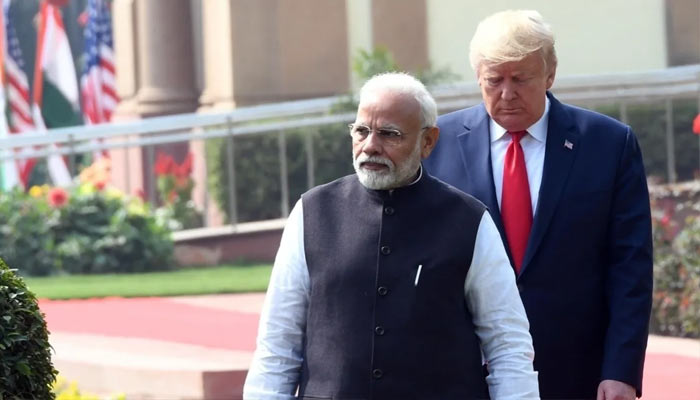
India on Thursday dismissed former US President Donald Trump’s claim that Prime Minister Narendra Modi had spoken to him over the phone and promised to stop buying Russian oil.
The Ministry of External Affairs (MEA) categorically denied any such conversation, saying, “There was no phone call between the two leaders yesterday.”
Trump had claimed during a White House briefing on Wednesday that PM Modi had assured him India would halt Russian oil imports — calling it “a big step” toward isolating Moscow amid the Ukraine conflict. “He assured me today that they will not be buying oil from Russia. That’s a big step,” Trump had said, adding that he shared a “great relationship” with the Indian leader.
Responding to these remarks, the MEA reaffirmed that India’s energy policy is guided by national interests, not external pressures. “Ensuring stable energy prices and securing reliable supplies remain our key priorities,” the ministry said, underscoring that procurement decisions are made with consumers’ welfare in mind.
The controversy quickly spilled into India’s political arena, with Opposition leader Rahul Gandhi accusing the Prime Minister of being “intimidated” by Trump and allowing the US to dictate terms on sensitive issues. Gandhi also referred to previous incidents, including India’s silence on Trump’s past statements and diplomatic snubs.
Russia, however, backed New Delhi’s position. Its Ambassador to India, Denis Alipov, said that India’s oil trade with Moscow aligns with its national interests, adding that the partnership remains “mutually beneficial and respectful of sovereignty.”
Trump’s remarks came as the US continued its push to pressure India into reducing dependence on Russian crude, which currently makes up nearly one-third of India’s imports. The former President also announced a steep 50 percent tariff — including an additional 25 percent penalty — on Indian imports, alleging that India’s purchases were helping fund Moscow’s war in Ukraine.
The tariff decision has strained efforts to revive negotiations on the US-India Bilateral Trade Agreement (BTA), though officials from both countries are expected to explore new rounds of talks soon.
Despite mounting Western pressure, India has repeatedly emphasized that its energy purchases from Russia are determined by affordability, security, and market conditions, not politics. For New Delhi, maintaining economic stability and access to affordable energy remains the foremost priority.
Comments are closed.