
Indian Navy’s ‘Abhimanyu’ Drone Set to Join Carrier Fleet by 2026 with AI, Stealth, and Lethal Capabilities

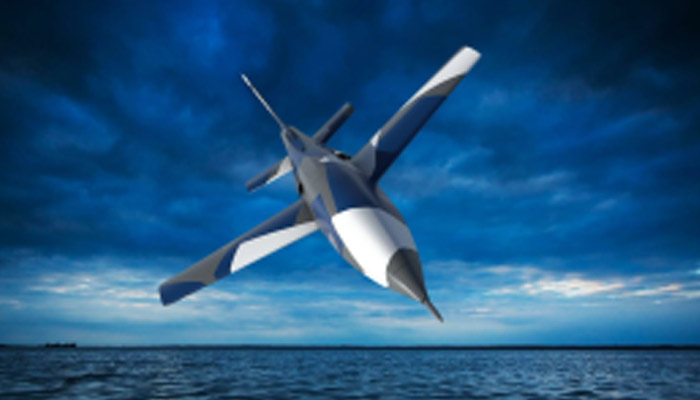
The Indian Navy is accelerating efforts to integrate unmanned aerial systems into its carrier air wings, with the indigenous ‘Abhimanyu’ drone developed by Bengaluru-based NewSpace Research and Technologies (NRT) at the forefront.
Part of the Naval Collaborative Combat Air Vehicle (N-CCAV) programme, Abhimanyu is designed to operate as a “loyal wingman” alongside manned fighter aircraft, positioning India among a few countries deploying such advanced systems. The jet-powered drone, expected to take flight by 2026, will feature AI-driven autonomous capabilities, manned-unmanned teaming (MUM-T), air-to-air strike potential, and stealth-inspired design to reduce radar detection.
Design and Capabilities
Abhimanyu is tailored to support the Navy’s current MiG-29K fighters and future Rafale-M aircraft. Its design includes swept wings, horizontal stabilisers, a single vertical tail, and twin narrow air intakes, with a continuous chine-line around the fuselage to lower its radar cross-section (RCS). While not fully stealth, the drone balances reduced detectability with cost-efficiency and rapid production, making it a practical and expendable platform.
Equipped with AI systems, Abhimanyu can fly autonomously and execute complex missions. In MUM-T mode, it enhances situational awareness, extending the sensor and strike capabilities of carrier-based fighters. Its air-to-air kill function allows it to engage hostile aircraft, complementing manned operations and reducing risks for human pilots.
Operational Role
Under the N-CCAV programme, Abhimanyu drones will increase the Navy’s operational flexibility by performing high-risk missions, intelligence gathering, surveillance, and potentially swarm or electronic warfare operations. These drones are expected to act as force multipliers for carrier strike groups, particularly in the strategically sensitive Indo-Pacific region.
Development and Funding
The project receives partial support from the Ministry of Defence’s Innovations for Defence Excellence (iDEX) initiative, along with internal funding from NRT. While initial iDEX funding is approximately $2.85 million, additional investment will be necessary for operational deployment and development of specialized variants. The Indian Navy has committed to a minimum purchase upon operational readiness, paving the way for full-scale production.
Compared to the HAL Warrior being developed for the Air Force’s Combat Air Teaming System (CATS), Abhimanyu is smaller, lighter, and designed for mass deployment with modular capabilities. While it does not match the high-end performance of China’s GJ-11 Sharp Sword or the US Navy’s Collaborative Combat Aircraft (CCA), it is optimised for affordability, rapid iteration, and practicality in Indian naval operations.
Challenges
Key challenges include achieving reliable autonomous performance in the demanding carrier environment, integrating with manned fighters, and maintaining consistent funding and production timelines. Despite these hurdles, Abhimanyu represents a significant step forward for Indian naval aviation, enhancing strike capabilities, operational survivability, and establishing a foundation for future indigenous unmanned technologies.
Comments are closed.