
India’s Ancient Buddhist Site Secures UNESCO World Heritage Status in 2026

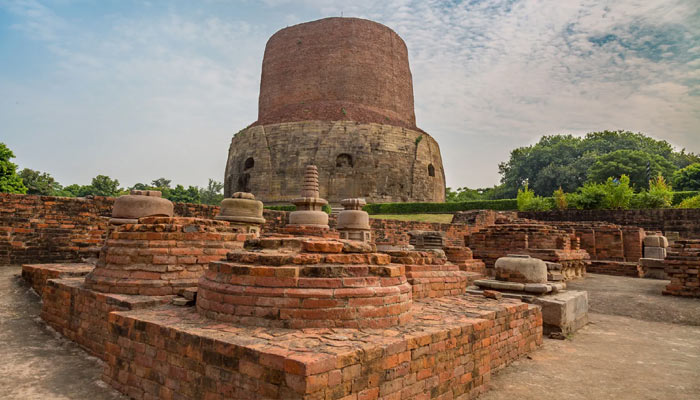
UNESCO Honours Sarnath as India’s 45th World Heritage Site, Celebrating the Birthplace of Buddhist Teachings
The ancient Buddhist site of Sarnath in Uttar Pradesh has been inscribed on the UNESCO World Heritage List in 2026, becoming India’s 45th World Heritage Site. Located near Varanasi, Sarnath is revered as the place where Gautama Buddha delivered his first sermon after attaining enlightenment at Bodh Gaya, setting in motion the spread of Buddhism across the world.
It was here that Buddha preached the Dhammacakkappavattana Sutta, or the “Turning of the Wheel of Dharma,” to his first five disciples, marking the beginning of the Buddhist Sangha and one of history’s most influential spiritual traditions.
Dhamek Stupa: Sarnath’s Most Recognisable Monument
At the heart of the archaeological complex stands the imposing Dhamek Stupa, nearly 43 metres tall. Built by Emperor Ashoka in the 3rd century BCE and expanded by later rulers, the stupa is believed to mark the exact location of Buddha’s first sermon.
Its finely carved stone base, adorned with floral and geometric patterns, contrasts with the towering brick structure above, making it the most iconic landmark of Sarnath.
Ashoka Pillar: A Symbol of Modern India
Sarnath is also home to the remains of the Ashoka Pillar, erected around 250 BCE. Although the sandstone pillar survives only in fragments, its famous Lion Capital, preserved in the nearby Archaeological Museum, was adopted as the National Emblem of India.
The pillar once carried Emperor Ashoka’s inscriptions promoting non-violence, ethical governance and religious harmony after his embrace of Buddhism.
- Where Ancient Heritage Meets Living Faith
- Unlike many archaeological sites, Sarnath remains a vibrant centre of Buddhist worship.
The Mulagandha Kuti Vihara, built in 1931 by the Mahabodhi Society, attracts devotees from across the world. The temple is known for its striking murals depicting the life of Buddha, while daily prayers and meditation sessions continue centuries-old spiritual traditions.
Nearby, the Chaukhandi Stupa marks the place where Buddha is believed to have first met the five disciples who later received his inaugural sermon.
A Peaceful Landscape Steeped in History
The surrounding Deer Park, where Buddha chose to begin teaching over 2,500 years ago, remains one of Sarnath’s defining features. Shaded pathways, ancient ruins and active monasteries create an atmosphere of serenity that continues to draw pilgrims, scholars and tourists alike.
Global Recognition for a Sacred Landmark
UNESCO’s recognition of Sarnath highlights its exceptional historical, cultural and spiritual significance. The site preserves the remains of ancient monasteries, stupas and monuments while continuing to serve as a living centre of Buddhist practice.
As India’s newest World Heritage Site, Sarnath stands not only as an archaeological treasure but also as a lasting symbol of peace, compassion and the enduring legacy of Buddha’s teachings.
Comments are closed.