
India’s Climate in 2025: Major Extreme Weather Events That Shaped the Year

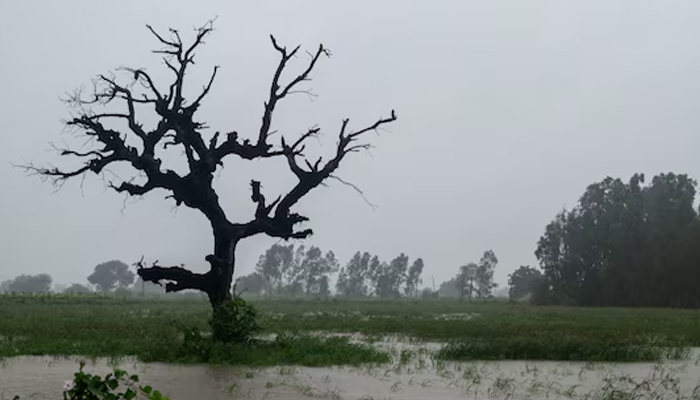
India’s Climate Crisis: The Extreme Weather Events That Defined 2025
As 2025 comes to an end, one reality stands out starkly — India has endured one of its most extreme climate years on record. Heatwaves, cyclones, floods, cold waves and storms repeatedly exposed how vulnerable the country has become to climate change.
A Year Marked by Alarming Extremes
The first major blow came in April, when a punishing heatwave pushed Delhi temperatures past 40°C, about 4°C hotter than similar heat events before 1987. A ClimaMeter analysis confirmed that human-induced warming intensified the heat across India and Pakistan.
Not long after, Cyclone Montha caused catastrophic losses of around ₹53 billion, hitting Andhra Pradesh hardest.
Meanwhile, Tamil Nadu faced torrential rainfall, coastal states remained on high alert, and northern India battled severe cold waves and dense fog.
99% of Days Saw Extreme Weather
The Climate India 2025 report by the Centre for Science and Environment (CSE) and Down To Earth revealed a staggering statistic:
India experienced extreme weather on 99% of days between January and September. Heatwaves, cold spells, lightning, storms, heavy rain, floods, and landslides dominated the year.
The impact:
4,064 deaths
9.47 million hectares of crops damaged
Northwest India witnessed the highest number of event days (257), followed by the east and northeast (229).
Human and Economic Fallout
The human toll was devastating.
Madhya Pradesh recorded the most deaths (532), followed by Andhra Pradesh (484) and Jharkhand (478).
In addition:
- 99,533 houses were destroyed
- 58,982 animals died
Millions of farmers suffered losses that are likely underreported
A Year of Unwanted Records
2025 set multiple disturbing climate milestones:
- January was the fifth driest since 1901
- February was the warmest in 124 years
- September ranked among the hottest on record
- Every one of the 122 monsoon days saw extreme weather
- Monsoon months were also the deadliest, with 3,007 fatalities, the highest since 2022.
CSE’s Kiran Pandey warned that rising monsoon temperatures disrupt the entire climate system: “This triggers erratic and extreme events — from floods to droughts — while threatening agriculture, food security, and public health.”
A Clear Call for Action
CSE director Sunita Narain issued a stark warning:
“We must understand the scale of what we’re facing. Cutting emissions is no longer optional, because adaptation alone cannot keep up with the disasters we are witnessing.”
Comments are closed.