
Indonesia’s Wildfire Damage Could Take Up to 350 Years to Heal, Scientists Caution

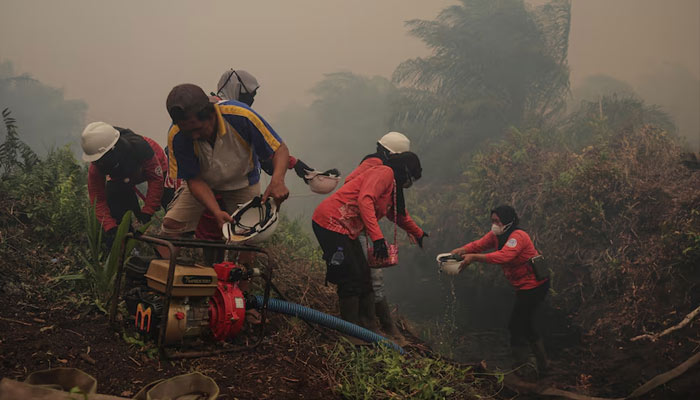
Indonesia Wildfires: Scientists Warn Carbon Lost From Burnt Landscapes May Take 350 Years to Restore
The devastating wildfires that swept across Indonesia in 2026 have left behind extensive environmental destruction, with scientists warning that the recovery of some affected ecosystems could take several centuries. A new analysis published by The Conversation suggests that restoring most of the carbon lost from burnt peatlands could take approximately 350 years.
The fires have spread across large areas of Papua, Sumatra and Borneo, destroying grasslands, tropical forests and peatland ecosystems. By late September, an estimated 1.9 million hectares had been affected, around 38 per cent more than the area recorded during the 2019 fire season.
Researchers estimate that the fires released nearly 100 million tonnes of carbon, equivalent to approximately 370 million tonnes of carbon dioxide. The scale of these emissions is comparable to the annual output of 97 coal-fired power plants.
Peatlands Face Centuries of Recovery
The most significant damage has occurred in Indonesia’s peatland regions. These areas represented approximately 20 per cent of the total land burnt, covering around 400,000 hectares, but contributed nearly 80 per cent of the carbon released by the fires.
Peatlands are important natural carbon reservoirs, storing partially decomposed vegetation accumulated over thousands of years. When they burn, large quantities of this stored carbon escape into the atmosphere, creating an additional challenge for climate protection.
According to the research, restoring peatlands affected by the 2026 fires could take around 400 years under ideal conditions. Even recovering 90 per cent of their lost carbon reserves may require approximately 350 years if restoration programmes encounter repeated disruptions.
Recovery periods vary considerably across ecosystems. Grasslands can regenerate within a few rainy seasons, while shrublands and agricultural areas generally require several years. Secondary forests may need 20 to 50 years to rebuild their carbon stocks, whereas tropical forests can require centuries to regain their original ecological characteristics and biodiversity.
Restoration Programmes Struggle to Prevent Recurring Fires
Indonesia has previously introduced several measures to protect its peatlands. After the major wildfire crisis in 2015, the government established the Peatland Restoration Agency with a target of rehabilitating 2.5 million hectares.
The initiative focused on blocking drainage channels to retain water in peat soils, reduce dryness and minimise the possibility of recurring fires. Before being disbanded in 2025, the agency reported restoring 1.6 million hectares outside commercial concessions.
Despite these efforts, fresh fires have affected several previously prioritised restoration locations, including parts of South Sumatra, West Kalimantan and Central Kalimantan.
Researchers say that financial pressures, land ownership disputes and agricultural practices remain major obstacles to successful restoration. In several rural areas, farmers continue to use fire as a low-cost method of clearing land.
In parts of Riau province, land cleared through burning can reportedly command prices 1.3 times higher than land cleared by removing vegetation mechanically. Meanwhile, demand for palm oil and other agricultural commodities continues to put pressure on vulnerable landscapes.
Experts Seek Stronger Conservation Measures
Scientists argue that restoring damaged ecosystems requires more than tree plantation drives and water management projects. Long-term conservation policies must also address the economic conditions that encourage land clearing and uncontrolled burning.
Supporting local communities, providing alternative sources of income and promoting sustainable farming practices could help reduce pressure on peatland ecosystems.
The findings underline the enormous gap between the time required to destroy natural ecosystems and the time needed to rebuild them. Although some vegetation can return relatively quickly, recovering the carbon stored in Indonesia’s damaged peatlands could take hundreds of years.
Researchers warn that sustained restoration efforts and stronger fire prevention measures are essential to protect these ecosystems and limit further contributions to global warming.
Comments are closed.