
Inside Jeffrey Epstein’s ‘Baby Ranch’ Plan To Create a ‘Super Race’, Documents Reveal

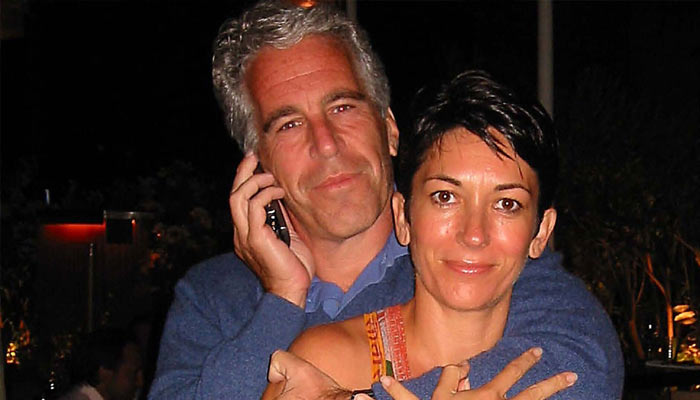
Jeffrey Epstein, the disgraced financier who died in a New York jail in 2019 while awaiting trial on federal sex-trafficking charges.
Allegedly harboured a chilling ambition beyond his criminal activities: to use his wealth, property and influence to propagate his own DNA and create what he privately described as a “super race” of humans. According to a New York Times investigation, Epstein repeatedly told scientists and associates over the years that he wanted to impregnate women at his sprawling New Mexico estate, an idea some who heard it referred to as a “baby ranch.” He reportedly imagined the ranch as a controlled environment where women would be inseminated with his sperm and give birth to his children. There is no evidence that the plan was ever carried out, and no confirmation that it would have violated the law.
Roots in transhumanism and eugenic thinking
Epstein’s thinking was tied to his fascination with transhumanism — a loosely defined movement that promotes the use of technology, including genetic engineering and artificial intelligence, to enhance human capabilities. Critics have long argued that some strains of transhumanist thought echo eugenics, the early-20th-century belief that humanity could be improved through selective breeding, an ideology later adopted and weaponised by Nazi Germany.
Epstein pleaded not guilty to charges that he trafficked girls as young as 14. Over time, journalists and investigators established that he frequently exaggerated his financial success, misrepresented his professional credentials and overstated his role in science and business. Despite this, his wealth allowed him to embed himself among powerful figures across politics, finance and academia.
Cultivating elite scientific circles
The NYT reported that Epstein deliberately courted prominent scientists, using donations and access to exclusive gatherings to secure legitimacy. Among those he associated with were Nobel Prize-winning physicist Murray Gell-Mann, theoretical physicist Stephen Hawking, evolutionary biologist Stephen Jay Gould and geneticist George M. Church.
Epstein funded conferences, paid for research initiatives and hosted informal salons where scientific ideas were discussed over lavish meals. Some scientists later acknowledged that the promise of funding dulled their awareness of Epstein’s criminal history.
He donated $6.5 million to help establish Harvard University’s Program for Evolutionary Dynamics and funded regular buffet lunches there. Epstein-backed conferences were also held in the US Virgin Islands, with guests flown in and entertained on his private island. On one occasion, scientists — including Hawking — joined a submarine excursion chartered by Epstein.
Harvard psychologist Steven Pinker said he attended gatherings described as informal salons at the invitation of colleagues such as Martin Nowak and Lawrence Krauss. Pinker recalled that Epstein dominated conversations and reacted poorly when challenged.
The ‘baby ranch’ proposal
At one Harvard session, Epstein criticised global efforts to reduce hunger and expand healthcare in poorer countries, arguing such interventions worsened overpopulation. Pinker said he challenged the claim, citing evidence that high infant mortality often leads families to have more children. Epstein appeared irritated, Pinker said, and he was later told he was no longer welcome at Epstein-hosted gatherings.
From the early 2000s, Epstein told scientists and business figures that he intended to use Zorro Ranch — a 33,000-square-foot estate outside Santa Fe — as a base where women would be inseminated with his sperm. Two award-winning scientists and a financial adviser independently recalled Epstein outlining the plan between 2001 and 2006, according to the NYT.
One adviser said he heard about the idea not only from Epstein himself but also from a prominent business figure at a Manhattan gathering. All described the plan as disturbing and implausible.
A woman who identified herself as a NASA scientist told the NYT that Epstein wanted as many as 20 women pregnant at the ranch at any given time. Epstein reportedly cited the Repository for Germinal Choice — a now-defunct sperm bank that sought donations from Nobel laureates — as inspiration. Only one Nobel Prize winner is known to have donated before the repository shut down in 1999.
Epstein also spoke openly about preserving his own body. A transhumanist associate said Epstein discussed cryonics, an unproven practice involving freezing bodies after death in the hope of future revival, and claimed he wanted his head and penis preserved.
Children, secrecy and unresolved claims
Whether Epstein ever fathered children remains unresolved. Recently released US Justice Department files — part of nearly three million documents — contain references suggesting the possibility. Among them is a diary entry by a woman who claims she gave birth to a baby girl around 2002, when she was 16 or 17, and that the child was taken from her shortly after birth under the supervision of Epstein’s former partner, Ghislaine Maxwell. These claims have not been independently verified.
The woman’s lawyers shared the diary with federal prosecutors. She later filed a civil lawsuit under a pseudonym against financier Leon Black, alleging rape at Epstein’s home. Black has denied the allegations, and the case remains ongoing.
There has never been public confirmation that Epstein had children, and none are mentioned in his will. His last known partner was Karyna Shuliak, to whom he reportedly intended to leave assets including his private island, Manhattan townhouse and $50 million.
An undated video from Epstein’s New York mansion shows a DNA paternity test kit on a table. In a 2011 email, Sarah Ferguson, Duchess of York, congratulated Epstein on the apparent birth of a baby boy, citing information relayed by Prince Andrew. Ferguson later said she had been encouraged to send the message and never received confirmation that a child existed.
Comments are closed.