
Inside the Four Chaotic Days That Led to the Surprise Israel-Lebanon Deal

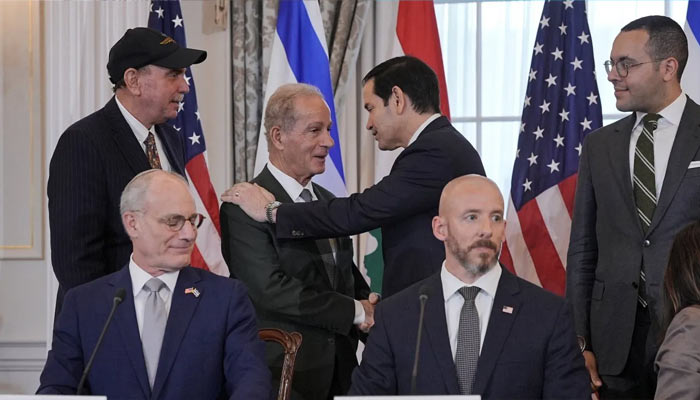
How Four Turbulent Days in Washington Delivered a Surprise Israel-Lebanon Breakthrough
What began in chaos ended in an unexpected diplomatic breakthrough.
According to an Axios report, negotiations between Israeli and Lebanese officials in Washington nearly collapsed on the very first day, with one senior US official describing the talks as “a train wreck.” Yet, after four days of intense shuttle diplomacy led by the United States, both sides reached what American officials describe as the most significant political understanding between Israel and Lebanon in more than 40 years.
A Difficult Start
The opening round of talks exposed a stark contrast between the two delegations.
US officials said the Israeli team arrived with a detailed negotiating strategy and a comprehensive list of demands, while the Lebanese delegation struggled to match its preparation and pace.
“The Lebanese were on their heels,” one US official told Axios, recalling how discussions repeatedly stalled as frustrations mounted. By the end of the first day, some participants privately questioned whether the negotiations had any realistic chance of succeeding.
US Steps In to Rescue the Talks
Realising that direct negotiations were heading towards failure, the US changed its approach.
Rather than simply facilitating discussions, Secretary of State Marco Rubio and his team reportedly took charge of the process, moving continuously between the Israeli and Lebanese delegations, rewriting proposals and working to bridge differences on contentious issues.
According to Axios, American negotiators became the driving force behind the agreement, persuading both sides to soften positions while crafting language that each government could accept.
A Shared Strategic Opportunity
Despite decades of hostility, both countries entered the negotiations believing the regional landscape had shifted in their favour.
For Israel, recent military operations against Iran and Hezbollah presented an opportunity to further weaken the Iran-backed group. Lebanon’s leadership, meanwhile, saw a chance to reinforce state authority after years of political instability, economic crisis and Hezbollah’s dominant influence.
Although their motivations differed, both governments recognised that curbing Hezbollah’s influence served their immediate interests.
Negotiating Against the Clock
US officials believed the diplomatic opportunity was unlikely to last.
Washington assessed that Lebanon’s government currently enjoyed greater political room to manoeuvre, while Israel believed Hezbollah had emerged significantly weaker after recent regional developments.
American negotiators reportedly urged both sides to seize the moment, warning that waiting could allow the political and military landscape to shift once again.
That sense of urgency helped keep the talks alive despite repeated disagreements.
Momentum Shifts
As negotiations progressed, the tone gradually changed.
US officials said the Lebanese delegation became more proactive in proposing solutions instead of simply rejecting Israeli demands. At the same time, Israel showed greater flexibility after receiving assurances on several security concerns.
The steady progress eventually produced an agreement that many participants had considered impossible after the disastrous opening session.
Hezbollah Rejects the Understanding
While Israel and Lebanon moved towards an agreement, Hezbollah reacted sharply. The Iran-backed group views the understanding as an attempt to strengthen Lebanon’s state institutions while reducing the influence it has exercised independently for years.
Hezbollah leader Naim Qassem publicly criticised the agreement, arguing that it was designed to weaken the organisation’s position inside Lebanon. Although US officials have hailed the accord as a major diplomatic success, they acknowledge that implementing its provisions will be the real test as tensions in the region continue to evolve.
Comments are closed.