
Iran War Backlash Deepens After Midterm Defeat, Trump Weighs Political Future Of Hegseth And Rubio

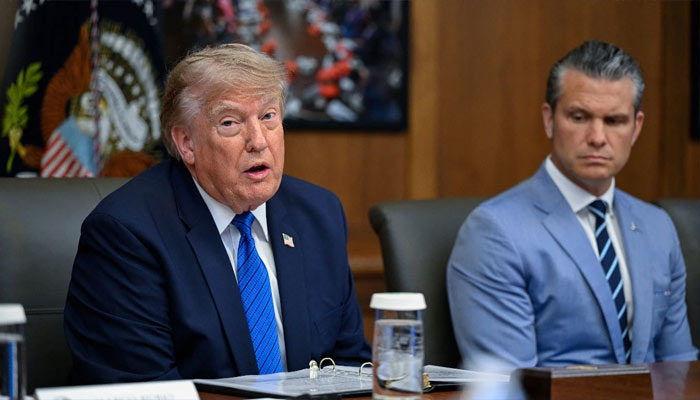
Trump Weighs Cabinet’s Future After Midterm Rout As Iran War Backlash Puts Hegseth In Trouble, Rubio Stays Firm
US President Donald Trump is facing mounting pressure to reassess his administration’s leadership following the Republican Party’s disappointing performance in the midterm elections. Defence Secretary Pete Hegseth and Secretary of State Marco Rubio are at the centre of growing speculation about possible changes in the Cabinet.
Hegseth’s handling of the war with Iran has attracted criticism from within Republican ranks, with one lawmaker threatening to initiate impeachment proceedings against him as early as next week.
Rubio, in contrast, has rejected claims that he is preparing to step down to focus on a potential presidential campaign in 2028. He has reiterated that he intends to remain in the administration until Trump’s term concludes.
The political turmoil follows a major Democratic victory, with the party securing control of both the House of Representatives and the Senate. The result has intensified internal Republican disagreements over the consequences of the Iran war, which is now in its ninth month, and its impact on the party’s electoral prospects.
Trump Backs Hegseth Despite Growing Republican Criticism
Hegseth’s leadership of the Defence Department is facing renewed scrutiny, with reports suggesting that some Republicans and administration officials believe his approach to the Iran conflict contributed to the party’s election losses.
Trump has nevertheless made it clear that he is not planning to remove his Defence Secretary. In a telephone conversation with ABC News, the President acknowledged receiving calls about Hegseth but said he intended to retain him.
At the White House, Trump again praised Hegseth’s performance, saying he had done a “fantastic job”. The President also highlighted the administration’s military actions, including the January arrest of Venezuelan leader Nicolás Maduro and the campaign against Iran.
However, the President’s defence has not stopped questions about the administration’s handling of the conflict. Critics within the Republican Party have argued that officials were too optimistic about the military campaign and failed to account for its political and economic repercussions.
Vice-President JD Vance has been particularly direct in linking the war to the Republican setback. In a post on X, he wrote, “The reason we lost is the war.”
Vance also questioned whether the military operation justified its political consequences, including the loss of Senate control for the next six years.
Trump has conceded that the conflict affected the election outcome but continues to stand by the decision to attack Iran. Speaking to Reuters, he said he would have made the same decision again.
Massie Threatens To Push Hegseth Impeachment
The pressure on Hegseth has increased after Republican Representative Thomas Massie threatened to bring his impeachment resolution to a vote when lawmakers return to Washington.
Massie told Politico that the move could take place as early as next week. He has also urged Trump to replace Hegseth before Democrats take control of Congress in January, arguing that the Senate confirmation process would be easier before the change in congressional leadership.
“He should do it while he can still get the replacements confirmed in the Senate,” Massie said in a post on X.
The Republican lawmaker had previously introduced articles of impeachment against Hegseth, alleging that he authorised military operations against Iran without congressional approval and committed other abuses of office. The resolution had remained stalled ahead of the midterm elections.
Hegseth has strongly rejected the allegations and described the impeachment initiative as a politically motivated exercise. In a video message, he called it a “sham articles of impeachment” effort led by a “disgruntled, defeated congressman” and his Democratic allies.
He defended his record by citing higher military recruitment, efforts to strengthen the defence industrial base and the removal of diversity programmes under Trump’s America First agenda.
Hegseth also accused Democrats of prioritising political attacks over policy, insisting that the criticism would not force him to change course.
Marco Rubio Dismisses Reports Of Possible Exit
While Hegseth faces an increasingly uncertain political future, Rubio has publicly rejected speculation that he could leave the Trump administration.
Bloomberg News had reported, citing people familiar with the matter, that Rubio and his advisers were considering his future after the Republican electoral setback. The discussions were reportedly linked to the possibility of a 2028 presidential campaign, although no departure decision or timeline had been established.
The White House and State Department dismissed the reports as “fake news”.
Rubio also addressed the issue in an interview with The New York Times, saying that serving Trump through the end of his presidential term had always been his plan.
“I love the work I’m doing,” he said, adding that he found reports about his possible departure amusing because they did not even specify which of his responsibilities he was supposedly planning to leave.
The former Florida senator, who challenged Trump for the Republican presidential nomination in 2016, is widely viewed as a potential contender in the 2028 race.
However, Rubio has refused to discuss his future electoral ambitions. “I literally will not talk about 2028 anymore. I just won’t do it,” he said.
The State Department has maintained that he remains committed to carrying out the President’s policies.
Dan Caine And Brad Cooper Could Also Face Review
The possibility of changes in the administration may not be limited to Cabinet members. A Washington Post report suggested that Trump could also consider replacing General Dan Caine, chairman of the Joint Chiefs of Staff, and Admiral Brad Cooper, head of US Central Command (CENTCOM).
Both military leaders have been closely involved in advising the administration on the Iran war.
According to the report, some officials believe the military leadership presented an overly positive assessment of the campaign’s progress while failing to communicate its risks and the resources required to sustain it.
Cooper, who has played a key role in directing the military operation, reportedly visited the White House in the days before the midterm elections to recommend additional action against Iran.
Caine, meanwhile, has reportedly expressed concerns about the war’s impact on America’s ability to conduct future military operations. These include the depletion of ammunition stocks and the lack of support from allies beyond Israel.
The developments have placed Trump’s national security leadership under fresh scrutiny at a critical political juncture. With Democrats set to control both chambers of Congress, the President faces growing pressure to defend his Iran policy while deciding whether changes in his Cabinet and military leadership are necessary.
Comments are closed.