

Tamil Nadu has always resisted the pull of national politics. It unseated the Congress at its peak in 1967, and decades later, even the rise of Narendra Modi has not altered that instinct.
The Bharatiya Janata Party, despite its dominance elsewhere, continues to falter in the state, humbled in successive elections since 2014.
This enduring exceptionalism raises familiar but unresolved questions. Is Tamil Nadu’s resistance rooted in a deep civilisational confidence tied to language and identity? Or is it a political construct, shaped and sustained by Dravidian parties to preserve their dominance? As another election cycle approaches, the answers remain contested—but the pattern is unmistakable.
This series attempts to probe that pattern, not through electoral arithmetic, but through moments, personalities and decisions that have shaped the state’s political character.
A Mandate, A Defiance
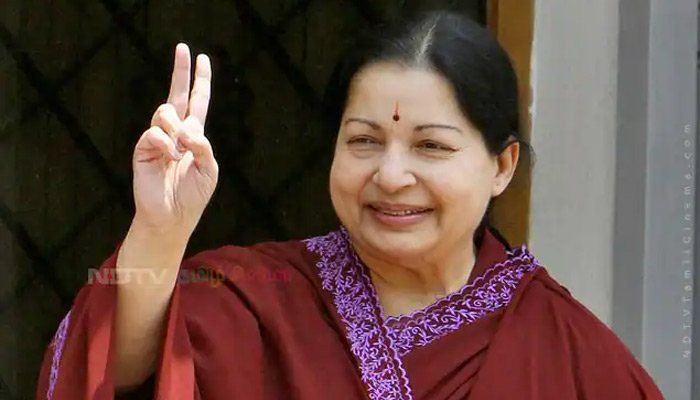
In May 2001, J. Jayalalithaa returned to power in a manner that was as dramatic as it was contentious. Disqualified from contesting, she was nonetheless sworn in as chief minister—a move that stretched constitutional propriety to its limits.
The electorate had delivered a decisive mandate to the AIADMK alliance. Jayalalithaa read it as a personal endorsement, one that, in her view, transcended legal technicalities. Governor Fathima Beevi formalised that reading, setting the stage for an inevitable confrontation between political will and constitutional principle.
Jayalalithaa did not return cautiously. She returned with intent—to govern, not to explain.
- The Night That Changed the Narrative
- That intent was most starkly visible within weeks.
In the early hours of June 30, former chief minister M. Karunanidhi was arrested in a dramatic police operation that quickly spiralled into a national controversy. Televised images of the 77-year-old leader being forcibly taken into custody transformed what might have been a legal case into a political flashpoint.
The optics overwhelmed the charges. What was projected as anti-corruption action came across as vendetta. And in one swift turn, Jayalalithaa’s assertion of authority handed Karunanidhi something he had lost in the election—public sympathy.
The situation escalated further when Union ministers Murasoli Maran and T. R. Baalu were also roughed up during the episode, drawing the Centre into what had begun as a state-level confrontation.
Power and Its Discontents
Jayalalithaa’s governing style during this phase was unmistakable—centralised, forceful, and often unyielding.
Her government’s relationship with the media grew increasingly adversarial. Critical voices were met with pressure—through legal cases, administrative levers, and direct police action. Journalists protesting detentions were themselves detained. During key political moments, access was controlled, and narratives were managed.
The press was not silenced, but it operated under a visible shadow.
The Politics of Severity
Her instinct for decisive, even extreme action surfaced repeatedly.
In 2002, she ordered the arrest of Vaiko under anti-terror laws, citing his pro-LTTE statements. The move was legally defensible but politically explosive, signalling a willingness to deploy the full force of the state even against regional actors.
For supporters, it reflected strength. For critics, it confirmed excess.
At the national level, the National Democratic Alliance government led by Atal Bihari Vajpayee watched developments with growing unease. Relations between Chennai and Delhi became strained, exposing the limits of Jayalalithaa’s political compatibility beyond the state.
When the Law Intervened
The confrontation between power and legality came to a head in September 2001, when the Supreme Court of India invalidated Jayalalithaa’s appointment.
The ruling was unambiguous: electoral popularity could not override disqualification.
Yet, even as she stepped down, her authority remained intact. Loyalist O. Panneerselvam assumed office, but the real centre of power did not shift.
Jayalalithaa had been removed from position, not from control.
Exit, Pause, Return
Her absence proved temporary. Legal relief cleared the way for her return, and after winning the Andipatti by-election in 2002, she was sworn in again—this time without constitutional dispute.
The comeback reinforced a familiar pattern: setback as interruption, not defeat.
Governing Without Apology
Her second stint carried a sharper administrative edge.
In 2003, her government dismissed thousands of striking employees in a sweeping crackdown that stunned the political establishment. It was a move that polarised opinion—seen as authoritarian by some, decisive by others.
This was Jayalalithaa at her most characteristic: willing to take politically risky decisions, betting that public frustration with entrenched systems would outweigh backlash.
Her governance was not built on consensus. It was built on command.
A Waiting Opposition
While Jayalalithaa dominated the political stage, the DMK recalibrated.
M. Karunanidhi, seasoned and patient, allowed discontent to accumulate. The party avoided direct confrontation, choosing instead to let the excesses of power create their own political consequences.
It was a quieter strategy—but no less effective.
Shifting Ground
At the national level, equations were also evolving. The DMK’s association with the NDA continued, but without deep ideological comfort. The death of Murasoli Maran in 2003 marked a turning point. A key strategist and bridge to Delhi, his absence weakened the party’s national leverage and altered internal dynamics.
Even as Prime Minister Vajpayee paid tribute, the political ground beneath was already shifting.
The Unfinished Arc
By the early 2000s, Jayalalithaa remained the dominant force in Tamil Nadu—feared, admired, criticised, but never ignored. She governed with authority, often pushed boundaries, and shaped the state’s political mood in her own image.
Yet, beneath that dominance, change was underway. The opposition was regrouping, alliances were realigning, and public sentiment was evolving.
In Tamil Nadu, power can be overwhelming—but never permanent.
Comments are closed.