

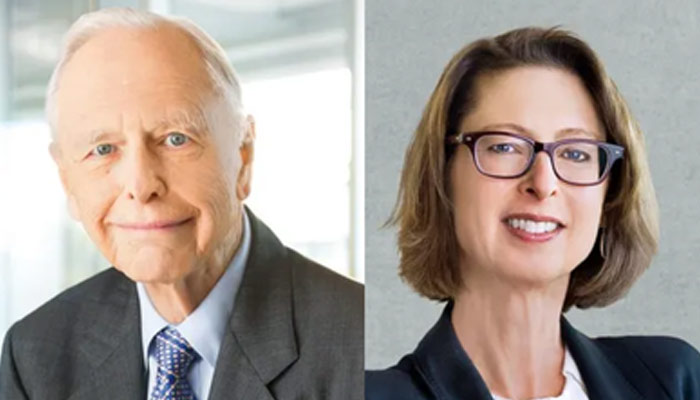
Fidelity Investments manages trillions of dollars and serves millions of investors, but one of the most defining chapters in its history was driven not by markets, but by a family power struggle.
In 2005, a bitter internal clash within the Johnson family pushed the firm to the brink of a leadership crisis. At the centre was Abigail Johnson, then head of Fidelity’s flagship mutual funds division, and daughter of chairman Edward C. Johnson III. Her division was under strain, grappling with weak performance, investor outflows and the fallout from a trading scandal, according to The Wall Street Journal.
Concerns among top executives and trustees had been mounting for months. The situation escalated when trustee Marvin Mann met Abigail at her home and told her bluntly that she was not doing a good job. Days later, her father informed her she would be removed from the role and shifted to oversee philanthropy — a move widely seen as a demotion.
Abigail’s response was swift: she quit.
But the rupture didn’t last. Within days, she was offered a new role — leading Fidelity Employer Services Company (FESCO), the firm’s rapidly expanding 401(k) business. She accepted, stepping into a division built by senior executive Bob Reynolds, who was said to be wary of her leadership.
Tensions, however, ran deeper than a single role. Differences emerged over Fidelity’s future, including whether the company should consider a sale — an idea Abigail firmly opposed, viewing it as a threat to decades of family control.
In a striking move, she signalled that she could use her position as a major shareholder to withhold support for board reappointments. Within the firm, fears grew that she was preparing to challenge her father’s authority. The standoff reached its peak at a board meeting in April 2005. But before it could escalate further, the family struck a compromise.
A decision to issue additional shares altered the balance of power, strengthening Ned Johnson’s control and easing the immediate tensions. In the years that followed, Abigail remained at the helm of FESCO and steadily rebuilt her standing within the firm. She eventually succeeded her father as chairman and went on to lead Fidelity through a period of significant growth.
Today, she heads one of the world’s largest investment firms — a reminder that even inside financial empires, leadership battles can be deeply personal.
Comments are closed.