
Kolkata’s Historic Rainfall Linked to Climate Shifts and Rising Sea Temperatures

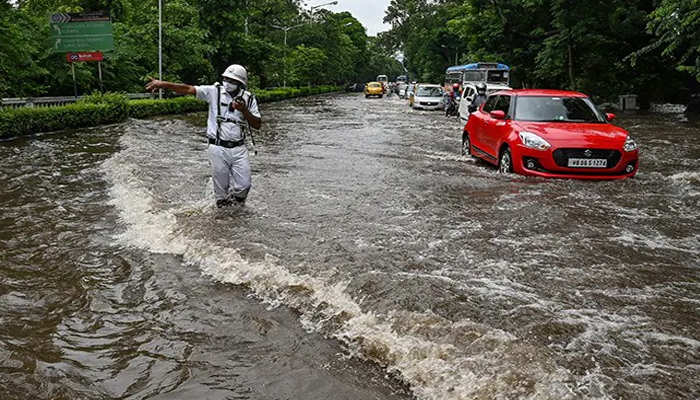
Kolkata’s Deluge: Scientists Link Historic Rains to Warming Oceans and Climate Change.
Kolkata is reeling from one of its heaviest downpours in decades, a calamity that experts warn reflects a disturbing new normal of climate-driven weather extremes.
Between Monday night and Tuesday morning, the city logged 251.4 mm of rainfall in 24 hours, the highest since 1986 and the sixth-wettest day recorded in 137 years, according to the India Meteorological Department (IMD). At least 10 lives were lost, nine to electrocution, across Kolkata and adjoining districts.
Rainfall intensity peaked between 3:00 and 4:00 a.m. on September 23, when the city nearly touched the cloudburst benchmark of 100 mm per hour. Meteorologists attributed the deluge to a low-pressure system that developed over the Bay of Bengal, drawing vast amounts of moisture inland.
Climate Signals Behind the Storm
Scientists say the event was not just bad luck but symptomatic of a warming Indian Ocean, which is altering rainfall patterns across South Asia.
Mahesh Palawat of Skymet Weather explained that unusually warm sea surface temperatures in the Bay of Bengal had fueled “intense convective clouds” and kept them active longer than usual.
Dr. Raghu Murtugudde, a leading climate scientist, linked the disruption to a chain reaction from Pacific typhoons. These massive storms, amplified by global warming, siphon moisture from the North Indian Ocean and disturb monsoon circulation. “Such interactions delay monsoon withdrawal and trigger extended rains in cities like Kolkata and Mumbai,” he warned.
The Indian Ocean: A Climate Hotspot
Research shows the Indian Ocean is warming faster than any other tropical ocean. Surface temperatures have risen by over 1.5°C since pre-industrial times, intensifying both cyclones and extreme rainfall.
Dr. Roxy Mathew Koll of the Indian Institute of Tropical Meteorology highlighted that by century’s end, much of the Indian Ocean will remain above 28°C year-round — ideal conditions for severe storms. He also cautioned about the rise of marine heatwaves, which could jump from 20 days a year to more than 200, with grave consequences for both weather and marine ecosystems.
Meanwhile, shifts in the Indian Ocean Dipole (IOD) — a key driver of monsoon variability — are expected to bring more frequent extreme events, further destabilizing South Asia’s climate.
A Stark Warning
The Kolkata deluge underscores the urgent need for climate-resilient urban planning, stronger disaster management systems, and rapid emissions reduction. As scientists stress, extreme weather is no longer rare. It is the new baseline for a warming planet.
Comments are closed.