
La Niña Alert Issued by Global Weather Office: What It Could Mean for India

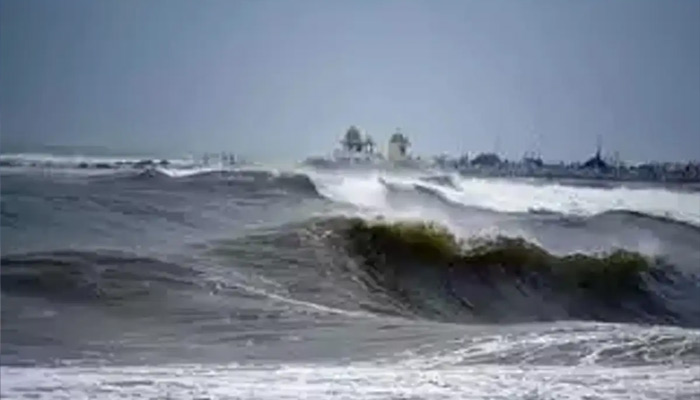
La Niña May Return From September: What It Could Mean for India.
The World Meteorological Organization (WMO) has warned that La Niña conditions may re-emerge from September, potentially affecting weather and climate patterns worldwide, including India.
Despite La Niña’s temporary cooling influence, global temperatures are expected to remain above average. La Niña and El Niño are opposite phases of a Pacific Ocean climate cycle: El Niño warms ocean waters near Peru, often weakening India’s monsoon and bringing milder winters, while La Niña cools these waters, usually strengthening the monsoon and causing colder, harsher winters.
WMO noted that these natural climate events occur amid human-induced climate change, which is raising global temperatures, intensifying extreme weather, and altering seasonal rainfall and temperature patterns.
Neutral conditions (neither El Niño nor La Niña) have prevailed since March 2025, with sea surface temperatures across the equatorial Pacific remaining near average. These conditions may gradually shift to La Niña from September.
WMO’s Global Producing Centres for Seasonal Prediction forecast a 55% chance of La Niña-level cooling in the equatorial Pacific from September to November 2025, with a 45% chance of ENSO-neutral conditions. For October–December, the likelihood of La Niña rises to around 60%, while El Niño remains unlikely.
“Seasonal forecasts for El Niño and La Niña and their impacts are important climate intelligence tools,” said WMO Secretary-General Celeste Saulo. “They translate into economic savings for agriculture, energy, health, and transport sectors, and have saved thousands of lives when guiding preparedness and response.”
While ENSO is a major driver of global climate patterns, other factors such as the North Atlantic Oscillation, Arctic Oscillation, and Indian Ocean Dipole also influence Earth’s climate. For September to November, forecasts project above-normal temperatures across much of the Northern Hemisphere and large parts of the Southern Hemisphere. Rainfall patterns are expected to resemble those typically seen during a moderate La Niña.
Comments are closed.