
Liquid Oxygen Leak Forces Fresh Delay in Axiom-4 Launch Carrying Shubhanshu Shukla

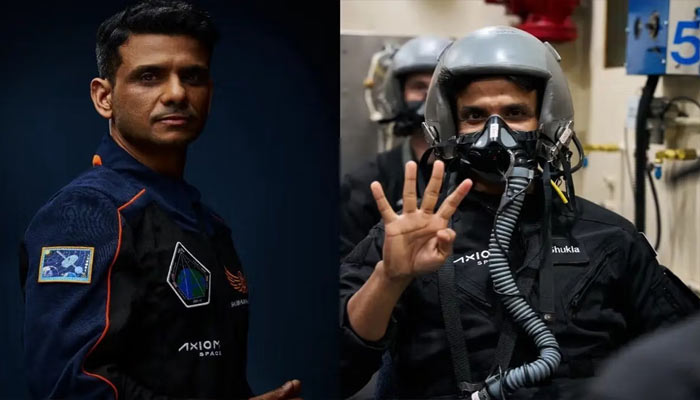
Axiom-4 Mission With Indian Astronaut Shubhanshu Shukla Delayed Again Due to Oxygen Leak.
The launch of the Axiom-4 (Ax-4) mission to the International Space Station (ISS), carrying Indian Air Force Group Captain Shubhanshu Shukla, has been delayed once again. SpaceX confirmed the latest postponement late Tuesday, citing a liquid oxygen (LOx) leak detected during routine post-static fire checks on the Falcon 9 booster.
“Standing down from tomorrow’s Falcon 9 launch of Ax-4 to allow additional time for SpaceX teams to repair the LOx leak,” the company said in a post on X. A new launch date will be announced after the repairs are completed and cleared by launch range officials.
The delay comes despite favourable weather forecasts. SpaceX had earlier stated that there was an 85% chance of suitable conditions for liftoff, although high-altitude winds remained under observation.
India’s space agency, ISRO, also confirmed the postponement. In a statement posted on X, it noted: “A seven-second hot test was carried out on the Falcon 9 launch pad to validate booster performance. LOx leakage was detected in the propulsion bay during the test.”
ISRO added, “Following discussions with Axiom Space and SpaceX, it was decided to correct the leak and conduct additional validation tests. Accordingly, the launch of Axiom-4, earlier scheduled for June 11, 2025, to send India’s first Gaganyatri to the ISS, has been postponed.”
This marks the fourth delay for the high-profile mission. Previous postponements were primarily due to adverse weather, including a 45% chance of rainfall and strong gusts at the Florida launch site. A joint effort by Axiom Space, NASA, SpaceX, and ISRO, the Ax-4 mission is a milestone for India, marking its return to human spaceflight after more than four decades since Rakesh Sharma’s historic 1984 mission.
Once launched, the Ax-4 crew will spend up to 14 days aboard the ISS conducting cutting-edge experiments in microgravity, life sciences, and material sciences. The research will be carried out in collaboration with scientists from over 30 countries.
Comments are closed.