
Market Today: Sensex Tanks 550 Points, Nifty Falls Below 23,250 Amid Global Cues

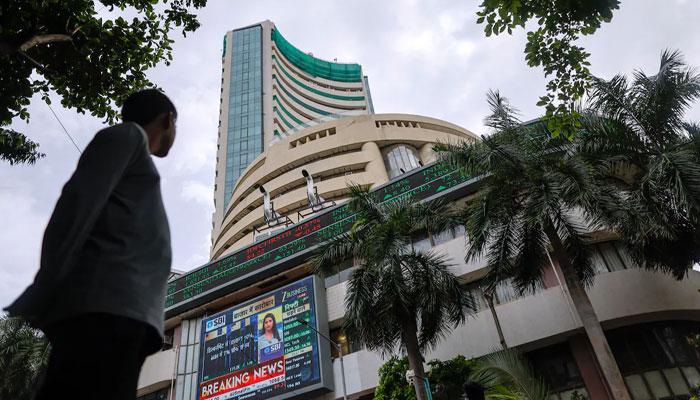
Stock Market Today, September 24: Sensex Slides 550 Points, Nifty Below 23,250 as Crude, Yields Rise
Indian stock markets came under heavy selling pressure at the opening on Thursday, September 24, as a combination of geopolitical uncertainty, elevated crude oil prices and rising global bond yields dampened investor sentiment.
The BSE Sensex fell 551.60 points, or 0.74%, to 74,276.65 at 9:16 am. The Nifty50 declined 207.65 points, or 0.89%, to 23,239.15.
The weak opening came amid renewed uncertainty over the US-Iran diplomatic process, while higher oil prices and a jump in Treasury yields added to concerns over inflation and global interest rates.
Why Are Indian Markets Falling Today?
Ponmudi R, CEO of Enrich Money, said the recovery in crude oil prices, combined with uncertainty around US-Iran talks and rising US Treasury yields, could lead to profit-taking following the market’s recent gains.
WTI crude was trading around $91-$92 per barrel, while Brent crude remained above the $100 mark.
Global markets also provided a weak backdrop after Wall Street ended sharply lower. Asian equities were mixed in early trading as investors continued to assess geopolitical developments and the outlook for global interest rates.
Ponmudi said uncertainty around the Middle East remained high despite recent developments that had raised expectations of a possible de-escalation.
Conflicting statements from Iranian officials regarding the Strait of Hormuz and the wider conflict have kept geopolitical risks elevated, he said.
Asian Markets Trade Mixed
Asian markets were divided on Thursday as investors weighed Middle East tensions, movements in government bond yields and the prospects of US-China talks.
Japan’s Nikkei 225 gained 1.73%, while the MSCI Asia ex-Japan index declined 0.64%. Australia’s S&P/ASX 200 was down 1.2%.
Bond markets remained a key focus. Japan’s 10-year government bond yield climbed to 3.06%, marking its highest level since August 1996.
The US 10-year Treasury yield was around 5.11% after rising to its highest level since 2007.
Investors are now awaiting fresh US economic data and comments from Federal Reserve officials for clues about the interest-rate outlook.
Oil Above $100, Gold Gains
Crude oil prices remained volatile as investors monitored geopolitical developments.
Brent crude stood at $102.05 per barrel, down 1%, while WTI crude declined 0.74% to $91.48. Spot gold rose 0.35% to $4,301.89 an ounce.
The Dollar Index edged down 0.04% to 101.09. The Japanese yen strengthened 0.24% to 157.91 per dollar.
Financial Stocks Take the Biggest Hit
Selling was visible across the broader market, with banking and financial stocks bearing the brunt of the decline.
The Nifty Bank index dropped 1.29%, while the Nifty Financial Services index fell 1.85%. The Nifty Midcap Select index was down 1.54%.
Among sectoral indices, Nifty Financial Services Ex-Bank declined the most, falling 2.96%. Nifty MidSmall Financial Services followed with a 2.17% decline.
Nifty Private Bank slipped 1.43%, while Nifty Metal fell 1.10%. Auto, IT, FMCG and Oil & Gas stocks were also trading lower.
Pharma was relatively resilient, with the Nifty Pharma index largely unchanged. Nifty MidSmall Healthcare gained 0.16%, while the Nifty Healthcare Index declined a marginal 0.17%.
India VIX Jumps Over 7%
Volatility increased sharply during the opening session. The India VIX climbed 7.22% to 11.09, compared with 10.35 in the previous session.
V K Vijayakumar, chief investment strategist at Geojit Investments Ltd, said the combination of Brent crude above $102 a barrel and the US 10-year Treasury yield at 5.11% would remain a key challenge for the market.
He said the near-term market environment would continue to be influenced by movements in crude prices and global bond yields.
Vijayakumar also pointed to continued buying interest in mid- and small-cap stocks. He said strong domestic liquidity has supported these segments despite relatively high valuations.
At the same time, large-cap stocks have remained comparatively subdued despite valuations that he described as more reasonable.
According to Vijayakumar, the market’s preference for mid- and small-caps could eventually change, with the timing likely to depend on how crude oil prices and bond yields evolve.
Comments are closed.