
Monsoon 2025: Climate Change Triggers Intense Rainfall Over Almost Half of India

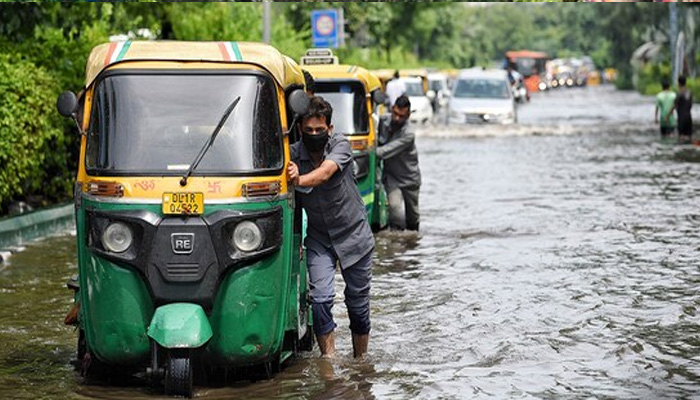
Monsoon 2025: Climate Change Drives Widespread Extreme Rainfall Across India.
The Southwest Monsoon of 2025 has left a lasting impact on India, with nearly 45% of the country experiencing extreme rainfall. The season triggered devastating floods and landslides, claiming over 1,500 lives. As the monsoon ended with 108% of the long-period average (LPA) rainfall, climate experts point to climate change—not El Niño or La Niña—as the primary factor behind the intensifying deluge, according to Climate Trends. This marks the second consecutive year of above-normal rainfall, highlighting global warming’s growing influence on India’s weather patterns.
A Wetter Monsoon in a Warming World
Spanning June to September, the 2025 monsoon brought unprecedented rainfall across India. The India Meteorological Department (IMD) reported:
- 19 of 36 meteorological subdivisions (46% of India) received normal rainfall
- 12 subdivisions (35%) saw excess rainfall
- 2 subdivisions (10%) recorded large excess rainfall
- Only 3 subdivisions (9%) faced deficient rainfall
Of India’s 727 districts, 328 recorded normal rainfall, 186 saw excess, 67 had large excess, and 134 faced deficits.
“Monsoon seasons are not the same anymore,” said K.J. Ramesh, former Director General of IMD. “Global warming has become the biggest driver. The number of rainy days has decreased, but rainfall per event has increased significantly.”
Over the past decade, five years recorded above-normal rainfall, two were normal, and three below-normal. This year, 14 of the 18 monsoon weeks delivered excess or large excess rainfall.
Regional Rainfall Highlights
Northwest India: Saw 27% excess rainfall, the highest since 2001. Ladakh reported 342% surplus, Rajasthan 60–70% excess.
Central India: Gujarat (+25%), Madhya Pradesh, and Maharashtra saw strong performance.
East and Northeast India: Faced 20% deficit, second-lowest since 1901. Assam, Arunachal Pradesh, and Bihar were worst affected.
West Coast: Konkan and Goa saw above-normal rainfall, but Kerala experienced a 13% deficit; Wayanad (-36%) and Idukki (-35%) were particularly impacted.
Surge in Extreme Weather Events
Monsoon 2025 triggered 2,277 flood and heavy rainfall events, claiming 1,528 lives. Madhya Pradesh recorded the highest fatalities (290), followed by Uttar Pradesh (201), Himachal Pradesh (141), and Jammu & Kashmir (139). August was the peak month for floods, with 28 of 59 Highest Flood Level (HFL) breaches occurring across nine river basins, including 10 incidents along the Yamuna.
“Extreme rainfall events have tripled since 1950,” said Mahesh Palawat, VP of Meteorology at Skymet Weather. “Low-pressure systems linger longer over land, fueled by warmer seas, causing cloudburst-like conditions.”
Climate Change: The Monsoon’s Driving Force
Experts attribute the monsoon’s intensity to climate change factors:
- Warmer Seas: Rising temperatures in the Arabian Sea and Bay of Bengal increased evaporation, loading the atmosphere with moisture.
- Shifting Western Disturbances: Traditionally a winter phenomenon, Western Disturbances now affect summer monsoons, triggering heavy rainfall in Northwest India.
- Middle East Warming: Rapid warming in the Middle East has increased rainfall in Northwest India by destabilizing the atmosphere and driving moisture northward.
- Himalayan Vulnerability: Accelerated glacial melt and permafrost thaw amplify flood risks in northern India.
A Nation Under Water
Flooding and landslides devastated multiple regions. The Ganga basin experienced the most incidents (32), followed by the Indus (15) and Krishna (4). August and September were particularly brutal, impacting Himachal Pradesh and Jammu & Kashmir.
“Monsoon 2025 was a wake-up call,” said Dr. Ramesh. “Rainfall patterns are shifting—more rain in Rajasthan and Gujarat, less in Uttar Pradesh and Bihar. Northeast India’s decline is alarming. We must adapt.”
Preparing for the Future
With climate change reshaping India’s monsoon, experts stress the need for proactive adaptation. Urban planning, flood management, and sustainable land use are essential to mitigate the impacts of increasingly erratic rainfall. As the Indian Ocean continues to warm, India must brace for more intense and unpredictable monsoon seasons.
Comments are closed.